
Filtration - AJR Filtration
Filtration protects equipment, products, people and the environment by removing contaminants from liquids, gases and air. From building HVAC to heavy industrial processes, the right filtration lowers costs and impr...

Bag filters are one of the most economical ways to remove solids from liquids at moderate to high flow rates. A filter bag sits inside a pressure vessel, captures particles and is simply swapped out when full.
Bag Filter Products
- Filter bags – felt and mesh in polypropylene, polyester and nylon
- Single bag vessels – compact filtration for lower flows
- Multi-bag vessels – high flow and long service life
- High-efficiency bags – absolute-rated and oil-absorbing options
- Baskets and seals – replacement parts for housings
Choosing a Bag Filter
Select micron rating, media and bag size based on the fluid, particles and flow rate. Choose vessel material (carbon steel, stainless, plastic) for pressure and chemistry. Swing-bolt closures simplify bag changes.
Centro supplies bag filters and vessels for water, chemical and process liquid filtration.
Related categories: Liquid Filtration | Cartridge Filters and Vessels | Lenticular Filters and Vessels | Hydraulic and Lube Oil

Dust filtration cartridges are pleated filter elements used in cartridge-style dust collectors. Their large media area captures fine dust efficiently in a compact footprint.
Cartridge Options
- Cellulose blend media – economical general-purpose filtration
- Spunbond polyester – moisture resistance and easy pulse cleaning
- Nanofiber media – high efficiency for fine dust
- PTFE membrane cartridges – sticky or very fine particulate
- Flame-retardant media – welding and hot sparks
Choosing Replacement Cartridges
Match cartridge dimensions, end cap style and gasket to your collector. Choose media based on dust type, moisture and efficiency requirements. Replace all cartridges at the same time for balanced airflow.
Centro supplies replacement dust collector cartridges for many collector brands.
Related categories: Dust Filtration | Collectors | Ducting

Dust filtration collectors remove airborne particulate, fumes and smoke from industrial processes. They protect workers, keep equipment clean and help meet environmental and combustible dust standards.
Collector Types
- Dust collectors – cartridge and baghouse units for production dust
- Smog collectors – oil mist and smoke from machining
- Portable fume extractors – welding and soldering
- Cyclones – pre-separation of heavy dust
Selecting a Collector
Size by airflow, dust type and concentration. Fine dust needs cartridge filtration, while heavy loading suits baghouses. Combustible dust requires explosion protection and compliance with NFPA standards.
Centro can help you select dust and smog collectors for your process.
Shop by type: Dust Collectors
Related categories: Dust Filtration | Dust Filtration Cartridges | Ducting

Dust is a problem in many industrial and commercial settings. Inhaling dust can trigger several respiratory issues, and it can also damage equipment. That's why it's essential to have a sound dust filtration system in place. We offer a complete selection of dust filtration products, including dust collectors, dust cartridges, ducting, and vents. We carry products from leading manufacturers, so you can be sure you're getting the best possible quality. Dust filtration is an integral part of any business, and we're here to help you find the right products for your needs. Browse our website today to learn more about our products and how we can help you keep your workplace safe and clean.
Shop by type: Ducting | Collectors | Dust Filtration Cartridges | Dust Personnel Cleaning
Related categories: Industrial Filtration | Strainers | Gas Filtration and Separation | Blast Cleaning | Automatic Cleaning
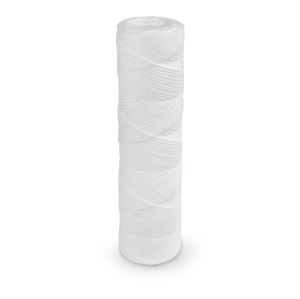
Cartridge filters remove fine particles from liquids and polish fluids for final clarity. Cartridges fit into housings ranging from single-round units to large multi-cartridge vessels.
Cartridge Filter Products
- Disposable cartridges – melt-blown, pleated, string-wound and carbon
- Metallic filters – cleanable, high-temperature service
- Cartridge vessels – single and multi-cartridge housings
- Absolute-rated filters – critical and sterile applications
Choosing Cartridges
Match cartridge length, diameter and end caps to your housing. Choose micron rating, media and efficiency for your process. Pre-filtration with bags extends cartridge life in dirty liquids.
Centro supplies cartridge filters and housings for liquid filtration applications.
Shop by type: Disposable Filters | Vessels
Related categories: Liquid Filtration | Bag Filters and Vessels | Hydraulic and Lube Oil | Lenticular Filters and Vessels
$6.37
Subject to factory lead times
$13.42
Subject to factory lead times
$11.08
Subject to factory lead times
$20.60
Subject to factory lead times
$29.28
Subject to factory lead times
$106.69
Subject to factory lead times
$151.54
Subject to factory lead times
$127.08
Subject to factory lead times
$129.31
Subject to factory lead times
$250.53
Subject to factory lead times
$73.77
Subject to factory lead times
$94.31
Subject to factory lead times
$137.38
Subject to factory lead times
$54.85
Subject to factory lead times
$100.92
Subject to factory lead times
$111.62
Subject to factory lead times
$125.54
Subject to factory lead times
$130.54
Subject to factory lead times
$151.15
Subject to factory lead times
$100.00
Subject to factory lead times
$130.08
Subject to factory lead times
$141.23
Subject to factory lead times
$122.77
Subject to factory lead times
$160.08
Subject to factory lead times
- Industrial filtration is the process of removing unwanted contaminants — solid particles, liquids, gases, and biological material — from air, water, process fluids, and gas streams in manufacturing and processing facilities. It is important because contamination directly impacts product quality, equipment life, worker safety, and regulatory compliance. Without effective filtration, particulates damage pumps, valves, heat exchangers, and instrumentation; airborne dust creates explosion hazards and respiratory risks; and product contamination leads to batch rejection, customer complaints, and regulatory violations. Filtration technologies span a wide range — from simple Y-strainers that catch pipe debris to sub-micron cartridge filters that purify pharmaceutical-grade liquids, from bag filters handling high-volume process streams to coalescing filters that remove oil aerosols from compressed air. The right filtration strategy protects capital equipment, ensures product meets specification, keeps workers safe, and helps facilities comply with EPA, OSHA, FDA, and other regulatory requirements.
- Choosing the right filter starts with four questions: what are you filtering (liquid, gas, air, or steam), what contaminants are you removing (particles, oil, water, biological material), what particle size must be captured (measured in microns), and what flow rate and pressure does the system require? For liquid filtration, bag filters and cartridge filters are the primary options — bag filters handle higher flow rates and larger particle loads cost-effectively, while cartridge filters provide finer filtration down to sub-micron levels. For gas and compressed air filtration, particulate filters remove solid particles, coalescing filters remove oil and water aerosols, and adsorption filters remove oil vapor and odors. For pipeline protection, strainers (Y-strainers and basket strainers) are installed upstream of pumps, valves, and instruments to catch large debris. For airborne dust and particulate, dust collectors with cartridge or bag filtration media capture contaminants at the source. The operating environment, chemical compatibility, temperature, and regulatory requirements further narrow the selection to the correct filter type, media material, and housing configuration.
- A micron rating indicates the size of the smallest particles a filter is designed to capture, measured in micrometers (µm). One micron is one-millionth of a meter — for reference, a human hair is roughly 70 microns in diameter, and bacteria are typically 0.5 to 5 microns. Filters are available from coarse ratings (100–200 microns for large debris) down to sub-micron ratings (0.01–1 micron for fine particulate, oil aerosols, and biological contaminants). Selecting the right micron rating depends on what you are protecting downstream and the quality specification your process requires. A coarse strainer (40–100 microns) upstream of a pump protects the pump from pipe scale and debris. A 5–25 micron bag or cartridge filter in a process line removes visible particulates. A 1 micron or finer cartridge filter is needed for pharmaceutical, food and beverage, or electronics manufacturing applications where product purity standards are stringent. Also consider whether you need a nominal rating (captures a percentage of particles at the stated size) or an absolute rating (captures virtually all particles at the stated size) — absolute-rated filters provide higher assurance for critical applications.
- Filter replacement or cleaning frequency depends on the contaminant load, flow rate, filter type, and how you monitor filter condition. The most reliable indicator is differential pressure — the pressure drop across the filter measured between the inlet and outlet. A clean filter has a low differential pressure; as the filter captures contaminants, the media becomes increasingly restricted and the differential pressure rises. Most filter housings include differential pressure gauges or ports for gauges. When the differential pressure reaches the manufacturer's recommended maximum (typically 15–35 psi for liquid filters, 2–10 psi for gas filters), the filter element should be replaced or cleaned. Operating beyond the maximum differential pressure risks filter bypass, media collapse, or contaminant breakthrough. In practice, many facilities establish a time-based replacement schedule as a baseline (monthly, quarterly, or semi-annually depending on conditions) and supplement it with differential pressure monitoring. Applications with highly variable contaminant loads benefit most from continuous differential pressure monitoring with alarms set at warning and change-out thresholds.