
Flow Control - ICON
Explore our comprehensive range of Flow Control products, featuring precision instruments such as flow meters, flow switches, flow transmitters, and flow sensors. Our offerings cater to diverse applications, ensuri...
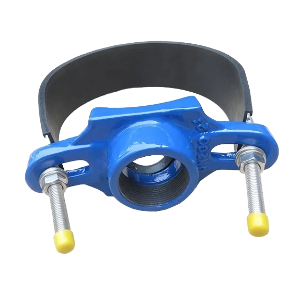
Flow meter accessories and parts are components used to enhance the functionality, accuracy, and performance of flow meters in various industrial applications. These accessories include items such as flow totalizers, transmitters, calibration equipment, and mounting hardware, which extend the capabilities of flow meters for measuring and monitoring fluid flow rates. Browse our selection below or contact us to speak with a product expert.
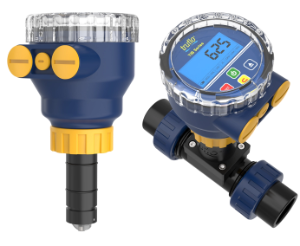
Turbine flow meters are advanced instruments designed to measure fluid flow by utilizing the rotation of a turbine within the fluid stream. These meters are widely employed in aerospace, petrochemical, and water management industries to provide accurate and real-time data on flow rates. Turbine flow meters excel in applications where precision is crucial, offering high accuracy and reliability. They play a pivotal role in optimizing processes, monitoring consumption, and ensuring the efficient operation of various systems.
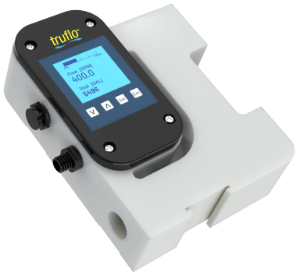
Ultrasonic flow meters use cutting-edge technology to precisely gauge the velocity of gas coursing through pipes. These meters employ transducers strategically positioned on opposite sides of the pipe. One transducer emits ultrasonic waves across the pipe, while its counterpart catches these waves. By timing the waves' journey upstream and downstream, these meters can accurately determine gas velocity. This data, when combined with the pipe's cross-sectional area, facilitates the calculation of gas flow rate. Renowned for their non-intrusive nature and versatility, ultrasonic flow meters find applications in various fields, including natural gas distribution, compressed air systems, and HVAC installations. Their appeal lies in their remarkable accuracy, wide turndown ratios, and low maintenance requirements, making them a preferred choice for gas flow measurement across industries. For further assistance and expert advice on selecting the right ultrasonic flow meter for your application, contact the product experts at Centro. They'll be glad to assist you.
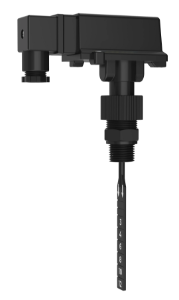
Flow switches are vital instruments in fluid systems that detect the presence or absence of flow. These devices ensure proper operation and prevent issues such as pump damage or system failure. Flow switches are employed in various industries to monitor and control the flow of liquids or gases, providing a reliable means of safeguarding equipment and optimizing fluid processes.
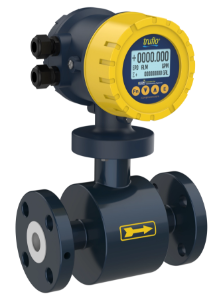
Magnetic flow meters are tools for measuring the flow of liquids in various industries. They work by using a magnetic field to determine the velocity of the fluid flowing through a pipe. One of the best things about these meters is their accuracy and reliability, especially when dealing with dirty or corrosive liquids. They're commonly used in water treatment plants, chemical processing, and even in food and beverage production because they have no moving parts and don't obstruct the flow, which means less maintenance and a longer lifespan. Browse our selection below or contact us to speak with a product expert.
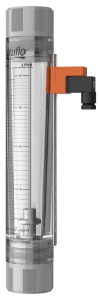
Rotameters are variable area flow meters that provide simple, reliable measurement of liquid or gas flow by indicating rate through the vertical movement of a float within a tapered tube. Commonly used in chemical processing, water treatment, laboratory, and OEM systems, rotameters offer visual, real-time flow monitoring without external power. With options for glass, plastic, or metal tubes and compatibility with corrosive or high-purity media, rotameters are a cost-effective solution for accurate, low-maintenance flow control in industrial applications.
Configure product to see pricing
Configure product to see pricing
Configure product to see pricing
Configure product to see pricing
Configure product to see pricing
Configure product to see pricing
Configure product to see pricing
Configure product to see pricing
Configure product to see pricing
Configure product to see pricing
Configure product to see pricing
Configure product to see pricing
Configure product to see pricing
Configure product to see pricing
Configure product to see pricing
Configure product to see pricing
Configure product to see pricing
Configure product to see pricing
Configure product to see pricing
Configure product to see pricing
Configure product to see pricing
Configure product to see pricing
Configure product to see pricing
Configure product to see pricing
Configure product to see pricing
Configure product to see pricing
Configure product to see pricing
Configure product to see pricing
Configure product to see pricing
Configure product to see pricing
Configure product to see pricing
Configure product to see pricing
Configure product to see pricing
Configure product to see pricing
Configure product to see pricing
Configure product to see pricing
Configure product to see pricing
Configure product to see pricing
Configure product to see pricing
Configure product to see pricing
Configure product to see pricing
Configure product to see pricing
Configure product to see pricing
Configure product to see pricing
Configure product to see pricing
Configure product to see pricing
- Measuring flow rate in a pipe requires a flow meter matched to the fluid type, pipe size, flow range, and accuracy requirement. For conductive liquids (water, chemicals, slurries), magnetic flow meters are the most popular choice — they have no moving parts, create no pressure drop, and handle dirty or abrasive fluids. For non-conductive liquids or retrofit installations where you can't cut the pipe, clamp-on ultrasonic flow meters mount externally and measure through the pipe wall. For applications requiring the highest accuracy or mass flow measurement (batching, custody transfer), Coriolis meters measure mass flow directly. For steam and gas, vortex meters are robust and widely used. For simple, low-cost local visual indication of flow rate, variable-area meters (rotameters) provide a direct reading without power or electronics. Flow switches are used when you only need to confirm flow is present or absent — for example, verifying cooling water is running before allowing a machine to start. The flow meter output (typically 4–20 mA) feeds back to a PLC or controller for monitoring, totalization, or closed-loop flow control.
- The flow meter technology must match the fluid type, pipe size, accuracy requirement, and process conditions. Magnetic (mag) flow meters measure conductive liquids (water, chemicals, slurries) using Faraday's law — they have no moving parts, handle dirty or abrasive fluids well, and are the default for water and wastewater applications. Ultrasonic flow meters (transit-time and Doppler) are non-intrusive and can be clamp-on, ideal for retrofit or applications where the pipe cannot be cut. Coriolis meters measure mass flow directly with very high accuracy — the premium choice for custody transfer, batching, and applications requiring density measurement. Vortex meters are robust and versatile for steam, gas, and liquid measurement in moderate-to-large pipe sizes. Variable-area meters (rotameters) provide simple, low-cost local visual indication of flow rate. Turbine meters offer high accuracy for clean, low-viscosity liquids. The best approach is to define the fluid properties, flow range, accuracy requirement, and installation constraints, then match to the technology that fits.
- A flow switch detects whether flow is present or absent (or above/below a threshold) and outputs a discrete on/off signal — it does not measure the actual flow rate. Flow switches are used for protection and alarm functions: confirming cooling water is flowing before allowing a machine to operate, detecting loss of lubrication flow to trigger a shutdown, or verifying that a pump is actually moving fluid. They are simpler and less expensive than flow meters. A flow meter, by contrast, measures the actual flow rate (GPM, liters/minute, SCFM, etc.) and provides a continuous analog or digital output proportional to the flow value. Flow meters are used when the control system needs to know how much fluid is flowing — for batching, dosing, energy accounting, and closed-loop flow control. If you only need to know whether flow is on or off, a flow switch is sufficient. If you need to know how much, you need a flow meter.
- A magnetic flow meter (mag meter) uses Faraday's law of electromagnetic induction to measure the velocity of a conductive liquid flowing through a pipe. The meter generates a magnetic field across the pipe, and the flowing conductive liquid produces a voltage proportional to its velocity — this voltage is measured by electrodes in the pipe wall and converted to a flow rate. Mag meters have several significant advantages: no moving parts (zero maintenance on the sensor itself), no obstruction to flow (full bore, no pressure drop), excellent performance with dirty, abrasive, and slurry-containing liquids, wide turndown ratios (typically 100:1 or greater), and bidirectional measurement capability. They are the standard choice for water and wastewater treatment, chemical processing, food and beverage, pharmaceutical, and pulp and paper applications. The main limitation is that the liquid must be electrically conductive (minimum ~5 µS/cm) — mag meters cannot measure hydrocarbons, deionized water, or gases.
- Flow meter sizing must balance accuracy, rangeability, and pressure drop. The meter should be sized so that the normal operating flow rate falls within the meter's optimal accuracy range — typically between 25% and 75% of its full-scale capacity. Sizing based solely on the pipe diameter is a common mistake — if the pipe is oversized for the actual flow rate (which is common in many installations), the flow velocity through the meter will be too low for accurate measurement. In these cases, the meter should be sized smaller than the pipe, with reducers and expanders installed to transition from the pipe size to the meter size. Key data needed for sizing includes the fluid type and properties (density, viscosity, conductivity, temperature, pressure), the minimum, normal, and maximum flow rates, the required accuracy, and the acceptable pressure drop. Most flow meter manufacturers provide online sizing tools where you input these parameters and receive a recommended meter size and model.