
Instrumentation, Measurement and Control - TEL-TRU
Instrumentation refers to devices that measure or control physical variables such as temperature, level, flow, or pressure. These products are essential in the industry because they allow for maximum output with mi...

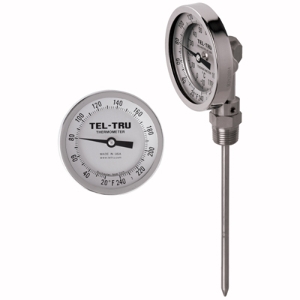
Bimetal thermometers are widely used temperature measurement devices that employ a bimetallic strip to indicate temperature changes. These thermometers consist of two metal strips, typically made of different metals with different coefficients of thermal expansion, bonded together. The metals expand or contract at different rates as the temperature changes, causing the bimetallic strip to bend. This bending motion is then translated into a rotational movement displayed on a calibrated dial to indicate the temperature. Bimetal thermometers are known for their simplicity, durability, and cost-effectiveness. They are commonly used in various industries and applications requiring reliable temperature monitoring, such as HVAC systems, automotive, food processing, and industrial processes. Bimetal thermometers offer advantages such as wide temperature ranges, resistance to shock and vibration, and ease of installation. They are available in different sizes and configurations to suit specific application requirements. With their robust construction and accurate temperature indication, bimetal thermometers provide a reliable and cost-effective temperature measurement solution in various industrial and commercial settings.
Related categories: Thermometers | Industrial Thermometers
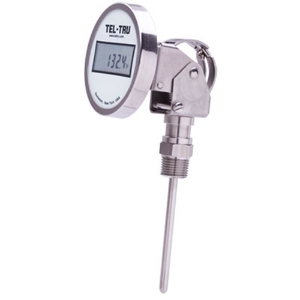
Industrial thermometers are specialized devices used to measure temperature in various industrial applications. These thermometers are designed to withstand harsh environmental conditions and provide accurate temperature readings in industrial settings. They are constructed with durable materials, such as stainless steel or ruggedized plastic, to withstand high temperatures, pressure, and vibrations. Industrial thermometers come in various types, including bimetallic thermometers, gas-actuated thermometers, infrared thermometers, and digital thermometers. They are used in industries such as manufacturing, oil and gas, HVAC, and food processing, where precise temperature control is critical for operational efficiency and safety. Industrial thermometers offer features such as wide temperature ranges, high accuracy, and corrosion resistance. They are often equipped with protective features like IP ratings or explosion-proof enclosures to ensure safe and reliable operation in hazardous environments. With their ability to provide reliable temperature measurements, industrial thermometers are crucial in process control, quality assurance, and monitoring critical temperature parameters in various industrial applications.
Related categories: Thermometers | Bi-Metal Thermometers
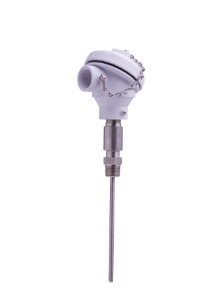
Thermocouples and RTDs are the most common temperature sensors in industrial processes. They provide accurate readings for control systems, recorders and safety interlocks.
Sensor Types
- Thermocouples – types J, K, T, E, N, R and S for wide temperature ranges
- RTDs – Pt100 and Pt1000 for high accuracy
- Mineral insulated sensors – rugged and bendable
- Head-mount assemblies – with transmitters and terminal blocks
- Surface and probe sensors – specialized mounting
Choosing a Sensor
Thermocouples handle higher temperatures, while RTDs offer better accuracy and stability. Specify sheath material, length, diameter and connection. Use matching extension wire.
Centro supplies thermocouples and RTDs for temperature measurement.
Related categories: Temperature Measurement, Instrumentation and Control | Temperature Switches | Thermometers | Temperature Controllers | Temperature Accessories

Pressure snubbers smooth out pressure spikes and pulsations before they reach gauges, switches and transmitters. Damping the surges gives steadier readings and helps instruments last longer, especially near pumps, compressors and quick-closing valves.
Snubber Types
- Porous metal disc snubbers – sintered elements for gases and light liquids
- Piston snubbers – self-cleaning action for dirtier fluids
- Adjustable snubbers – tune the damping to your system
- Brass and stainless steel – match media compatibility
Choosing a Snubber
Select the element grade based on fluid viscosity: finer discs for air and water, coarser for oils. Match thread sizes to your gauge and process connection. For very severe pulsation, combine a snubber with a liquid-filled gauge.
Centro carries pressure snubbers and gauge accessories to protect your instruments.
Related categories: Pressure Control Accessories | Manifold Valves | Gauge Cock Valve | Instrument Valve | Syphons
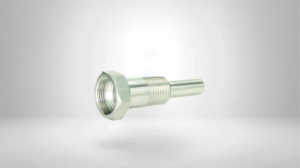
Thermowells protect temperature sensors from pressure, flow, corrosion and abrasion. They also let you remove sensors for replacement or calibration without draining or shutting down the process.
Thermowell Types
- Threaded thermowells – common for general service
- Socket weld and weld-in – high-pressure installations
- Flanged thermowells – easy removal and corrosive service
- Sanitary thermowells – tri-clamp for food and pharma
- Tapered and stepped stems – strength and fast response
Choosing a Thermowell
Select material, insertion length, bore size and connection. For high-velocity flows, perform a wake frequency calculation to avoid stem failure.
Centro supplies thermowells for temperature sensors and thermometers.
Related categories: Temperature Measurement, Instrumentation and Control | Temperature Regulators | Temperature Transmitters | Temperature Sensors | Temperature Recording

Temperature accessories help your sensors and instruments read accurately and last longer. Thermowells, fittings, connection heads and extension wire protect sensors from the process and make installation and replacement simpler.
Accessories Available
- Thermowells – threaded, socket weld and flanged wells protect sensors from pressure and flow
- Compression fittings – adjustable sensor insertion depth
- Connection heads – house terminal blocks and head-mount transmitters
- Thermocouple and RTD extension wire – carry signals back to the controller
- Connectors and plugs – quick disconnects for sensors
Choosing Accessories
Select thermowell material and length for the process, with the tip in the flow, and check the wake frequency calculation for high-velocity lines. Use extension wire that matches the thermocouple type to avoid reading errors. Head and enclosure ratings should match the environment.
Centro carries temperature accessories to complete your sensor installations.
Related categories: Temperature Measurement, Instrumentation and Control | Thermometers | Heat Exchangers | Thermocouples and RTDs | Temperature Switches
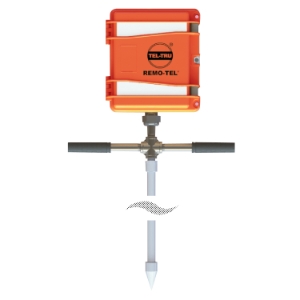
Temperature sensors measure heat in processes, equipment and buildings. They're the most common measurement in industry and are critical for quality, safety and efficiency.
Temperature Sensor Types
- Thermocouples – wide ranges and fast response
- RTDs – high accuracy and stability
- Thermistors – sensitive, low-cost sensing
- Infrared sensors – non-contact measurement
- Surface and immersion probes – suit installation
Choosing a Sensor
Select by range, accuracy, response time and installation. Use thermowells in pressurized lines, and match extension wire for thermocouples.
Centro supplies temperature sensors and assemblies.
Related categories: Temperature Measurement, Instrumentation and Control | Temperature Regulators | Thermowells | Temperature Transmitters | Temperature Recording
Pressure control products measure, monitor and regulate pressure in liquids, gases and steam. Accurate pressure control protects equipment and keeps processes stable.
Pressure Control Products
- Gauges – pressure, differential and specialty gauges
- Pressure transmitters and transducers – electronic monitoring
- Pressure switches – alarm and control set points
- Pressure regulators and sequence valves – control downstream pressure
- Accessories – snubbers, syphons, manifolds and gauge valves
Building a Measurement Point
Choose instrument range, accuracy and wetted materials, then add the right accessories, such as isolation valves and snubbers, for safe, accurate readings.
Centro supplies pressure control instruments and accessories from leading brands.
Shop by type: Pressure Transducers | Pressure Control Accessories | Gauges | Pressure Switch | Pressure Transmitters | Pressure Regulators | Sequence Valves
Related categories: Instrumentation, Measurement and Control | Controllers | Flow Control | Recorders | Seals and Accessories
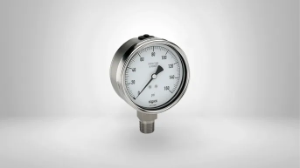
Pressure gauges are instruments used to measure the pressure of fluids or gases in various industrial, commercial, and residential applications. They visually indicate the pressure levels, allowing operators to monitor and control processes effectively. Pressure gauges consist of a dial or digital display with a needle or numeric readout representing the pressure measurement in units such as PSI (pounds per square inch) or kPa (kilopascals). They typically feature a Bourdon tube, diaphragm, or other sensing elements that convert the applied pressure into a mechanical displacement, which is then displayed on the gauge. Pressure gauges are available in different types, including analog and digital, with varying accuracy levels and pressure ranges to suit specific application requirements. They are commonly used in oil and gas, manufacturing, HVAC, and automotive industries, where pressure monitoring is critical for operational safety, system performance, and quality control. Pressure gauges provide valuable feedback for adjusting process parameters, detecting leaks or anomalies, and ensuring the optimal functioning of equipment and systems.
Shop by type: Industrial Gauges | Process Gauges | Commercial Gauges | Test Gauges | Differential Pressure Gauges | Digital Gauges
Related categories: Gauges | Gauge Parts & Accessories | Manometers | Tridicators
$258.29
Subject to factory lead times
$258.29
Subject to factory lead times
$258.29
Subject to factory lead times
$258.29
Subject to factory lead times
$258.29
Subject to factory lead times
$258.29
Subject to factory lead times
$258.29
Subject to factory lead times
$258.29
Subject to factory lead times
$258.29
Subject to factory lead times
$258.29
Subject to factory lead times
$258.29
Subject to factory lead times
$258.29
Subject to factory lead times
$258.29
Subject to factory lead times
$258.29
Subject to factory lead times
$258.29
Subject to factory lead times
$258.29
Subject to factory lead times
$258.29
Subject to factory lead times
$258.29
Subject to factory lead times
$258.29
Subject to factory lead times
$258.29
Subject to factory lead times
$258.29
Subject to factory lead times
$258.29
Subject to factory lead times
$258.29
Subject to factory lead times
$276.09
Subject to factory lead times
$258.29
Subject to factory lead times
$258.29
Subject to factory lead times
$258.29
Subject to factory lead times
$258.29
Subject to factory lead times
$258.29
Subject to factory lead times
$258.29
Subject to factory lead times
$258.29
Subject to factory lead times
$258.29
Subject to factory lead times
$258.29
Subject to factory lead times
$258.29
Subject to factory lead times
$258.29
Subject to factory lead times
$258.29
Subject to factory lead times
$258.29
Subject to factory lead times
$258.29
Subject to factory lead times
$258.29
Subject to factory lead times
$258.29
Subject to factory lead times
$258.29
Subject to factory lead times
$258.29
Subject to factory lead times
$258.29
Subject to factory lead times
$258.29
Subject to factory lead times
$258.29
Subject to factory lead times
$258.29
Subject to factory lead times
$258.29
Subject to factory lead times
$276.09
Subject to factory lead times
- Selecting the right process instrument starts with defining four things: what variable you need to measure (temperature, pressure, flow, or level), the process conditions the instrument will face (media type, temperature range, pressure range, corrosiveness, and whether the environment is hazardous), the accuracy and response time your application requires, and how the measurement data needs to be communicated (local display only, 4–20 mA signal to a PLC/DCS, or digital protocol like HART or Modbus). For temperature, the choice between thermocouples, RTDs, and infrared sensors depends on the temperature range and accuracy needed. For pressure, gauge type, range, wetted materials, and whether you need local indication or a remote transmitter signal are the key decisions. For flow, the fluid properties (conductive liquid, gas, steam, slurry) determine whether a magnetic, ultrasonic, Coriolis, vortex, or variable-area meter is the best fit. For level, vessel conditions (open vs. pressurized, clean liquid vs. foam/solids) guide the choice between float switches, ultrasonic, radar, or differential pressure technologies. Centro's instrumentation specialists can help you match the right technology to your specific process conditions and budget.
- Accurate process instrumentation is the foundation of safe, efficient, and compliant operations. Every control loop — whether it manages boiler pressure, reactor temperature, tank level, or pipeline flow — depends on instruments that provide reliable, real-time measurements. If a temperature sensor reads inaccurately, a heater may overshoot and damage the product or create a safety hazard. If a level transmitter drifts, a tank may overflow or run dry. If a flow meter is undersized, the control system cannot maintain the correct feed rate. Beyond safety and quality, accurate instrumentation directly impacts energy consumption, raw material usage, and regulatory compliance. Calibrated, properly specified instruments reduce waste, prevent unplanned shutdowns, and provide the data required for regulatory reporting and quality documentation.
- A process control loop is a system that continuously measures a process variable, compares it to a desired setpoint, and adjusts an output to keep the variable at the setpoint. The loop consists of three elements: the sensor/transmitter (measures the variable — e.g., a thermocouple measuring temperature), the controller (compares the measurement to the setpoint and calculates a corrective output — typically a PID controller), and the final control element (adjusts the process — e.g., a control valve that opens or closes to change steam flow). Instruments are the eyes and ears of the loop — without accurate, responsive sensors and transmitters, the controller cannot make correct decisions, and the process drifts out of specification. The entire loop must be properly engineered as a system — sensor accuracy, transmitter range, controller tuning, and valve sizing must all be matched to the process requirements.
- Industrial instruments communicate with controllers and PLCs using standardized electrical signals. The 4–20 mA analog current loop is the most widely used signal in process instrumentation — it transmits a variable measurement as a proportional current (4 mA = zero/low range, 20 mA = full scale), and the current-based signal is resistant to voltage drop and electrical noise over long cable runs. The 0–10 V DC voltage signal is used in some HVAC and building automation applications but is more susceptible to noise and cable length limitations. Discrete (on/off) signals — from switches, relays, and transmitter alarm contacts — indicate threshold conditions like high level, low pressure, or flow/no-flow. Digital communication protocols — HART (layered on top of 4–20 mA for configuration and diagnostics), Foundation Fieldbus, PROFIBUS PA, and IO-Link — enable bidirectional communication between the instrument and the control system for advanced diagnostics, remote configuration, and multi-variable data.
- When instruments are installed in locations classified as hazardous (areas where flammable gases, vapors, or combustible dusts may be present), they must be approved for that classification to prevent ignition. Key considerations include the area classification (Class I for gases/vapors, Class II for dusts, with Division 1 for normally present hazards and Division 2 for abnormal conditions — or Zone 0/1/2 under ATEX/IECEx), the protection method (intrinsic safety, explosion-proof, non-incendive, or purged/pressurized), and the specific gas group and temperature class. Intrinsically safe (IS) instruments — used with IS barriers in the safe area — limit energy to levels too low to cause ignition and are the most common and practical approach for low-power sensors and transmitters. Explosion-proof enclosures contain any internal explosion and are used for higher-power devices. Always verify the instrument's certification (FM, CSA, ATEX, IECEx) matches the area classification before installation.