
Pneumatic Cylinders and Actuators - Aventics
Pneumatic cylinders and actuators are used in a variety of industrial applications. Pneumatic cylinders and actuators use compressed air to create a force in a linear or rotary motion. Pneumatic cylinders come in ...
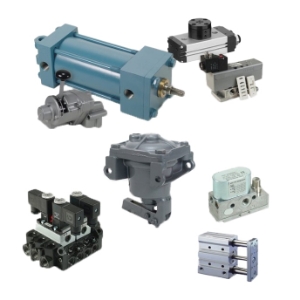
NFPA cylinders are tie-rod pneumatic cylinders built to North American interchangeable dimensions. They're rugged, repairable and easy to replace across brands, so they're a staple in industrial machinery.
NFPA Cylinder Features
- Interchangeable dimensions – swap brands easily
- Many mounting styles – clevis, flange, trunnion and foot
- Bore sizes 1-1/2" to 12" – wide force range
- Adjustable cushions – smooth end-of-stroke
- Repair kits – rebuildable for long life
Choosing a Cylinder
Select bore, stroke, rod size and mounting. Magnetic pistons support position sensing. Stainless options suit washdown areas.
Centro supplies NFPA cylinders and repair kits.
Related categories: Pneumatic Cylinders and Actuators | Seal and Repair Kits | Clamps | Rodless Cylinders | Linear Cylinders
Seals and repair kits are indispensable for various mechanical systems and equipment maintenance and repair operations. Seals, which come in a wide range of materials and designs, are critical for preventing leaks and maintaining the integrity of hydraulic, pneumatic, and mechanical systems. These seals effectively block the escape of fluids, such as oil or gas, and play a vital role in ensuring system efficiency and longevity. Repair kits are curated collections of replacement parts, including seals, gaskets, O-rings, and other essential components. They are designed to simplify the repair and maintenance process by providing all the necessary parts in one package, facilitating quick and cost-effective fixes. Whether it's a hydraulic system in heavy machinery or a simple household appliance, seals and repair kits are crucial for ensuring the reliability and longevity of mechanical systems by preventing leaks and facilitating efficient repairs.
Related categories: Pneumatic Cylinders and Actuators | Rodless Cylinders | NFPA Cylinders | Air Bellows | Clamps
We offer linear cylinders, also known as linear actuators or hydraulic/pneumatic cylinders, which are mechanical devices that convert energy into linear motion. They are widely used in various industries, including manufacturing, automation, construction, and transportation. Linear cylinders consist of a piston or plunger that moves back and forth within a cylindrical housing, generating linear force and motion. These cylinders are powered by hydraulic fluid or compressed air, which is supplied to one side of the cylinder to push the piston in one direction, while the other side vents or returns the fluid to complete the cycle. Linear cylinders come in different designs, such as single-acting (one-directional force) and double-acting (bi-directional force). They offer precise control over linear movement, allowing for precise positioning, lifting, pushing, pulling, and clamping applications. Linear cylinders are essential in various industrial processes, such as material handling, machine tooling, assembly lines, and heavy equipment operations. With their robust construction, reliable performance, and versatility, linear cylinders enable efficient and controlled linear motion in various applications.
Related categories: Pneumatic Cylinders and Actuators | Clamps | Rotary Actuators | NFPA Cylinders | Pneumatic Cylinder
Rodless cylinders move loads along their full length without an extending rod. That saves space and allows long strokes for transfer, positioning and material handling.
Rodless Cylinder Types
- Mechanically coupled – slotted barrel with carriage
- Magnetically coupled – sealed barrel with no leaks
- Guided rodless cylinders – handle side and moment loads
- Long-stroke designs – several meters
Choosing a Cylinder
Consider load, moments, stroke, speed and cushioning. Add external guides for heavy offset loads, and position sensors for automation.
Centro supplies rodless cylinders for automation.
Related categories: Pneumatic Cylinders and Actuators | Air Bellows | Seal and Repair Kits | Compact and Short Stroke | NFPA Cylinders
Round body cylinders are compact, economical pneumatic cylinders for light to medium-duty automation. They're popular for simple push, pull and clamp tasks.
Features
- Compact round design – fit small spaces
- Stainless steel options – washdown and food
- Non-repairable and repairable – cost or service life
- Multiple mounts – nose, pivot and foot
Choosing a Cylinder
Select bore, stroke and mounting. Magnetic pistons support position sensing.
Centro supplies round body cylinders.
Related categories: Pneumatic Cylinders and Actuators | High Force Actuators | Guided Cylinders | Mounting | Compact and Short Stroke
Compact and short stroke cylinders deliver pneumatic force where space is tight. They're used for clamping, pressing, stopping and short positioning moves in automated machines.
Cylinder Types
- Compact cylinders – ISO 21287 and short body designs
- Short stroke cylinders – minimal length
- Pancake cylinders – very low profile
- Guided compact cylinders – anti-rotation and side load support
Choosing a Cylinder
Select bore for force, stroke for motion and mounting for available space. Magnetic pistons allow position sensing.
Centro supplies compact and short stroke cylinders.
Related categories: Pneumatic Cylinders and Actuators | Guided Cylinders | Air Bellows | Round Body Cylinders | Rodless Cylinders
Guided cylinders combine a pneumatic cylinder with integrated guide rods, resisting side loads and rotation. They're ideal for lifting, pushing and stopping where precision matters.
Features
- Integrated guides – handle side and moment loads
- Anti-rotation – precise tool orientation
- Ball and plain bearings – accuracy or durability
- Compact design – replace cylinder plus external guides
Choosing a Cylinder
Select by load, stroke, moments and accuracy. Position sensors confirm movement.
Centro supplies guided cylinders for automation.
Related categories: Pneumatic Cylinders and Actuators | Round Body Cylinders | Compact and Short Stroke | High Force Actuators | Air Bellows
Pneumatic slides are essential mechanical components used in various industrial and automation applications. These devices harness compressed air to facilitate controlled linear motion, allowing objects or tools to rapidly move back and forth. Pneumatic slides are designed to be versatile and adaptable, making them suitable for tasks such as material handling, assembly, and positioning in manufacturing and automation processes. They are often equipped with features like adjustable stroke length, speed control, and robust construction to withstand demanding operating conditions. Pneumatic slides contribute to increased efficiency, repeatability, and accuracy in various industries, making them valuable for achieving streamlined and reliable mechanical motion in automated systems.
Related categories: Pneumatic Cylinders and Actuators | Cylinder Accessories | Mounting | Specialty Cylinders | High Force Actuators
Cylinder and actuator mounts attach pneumatic cylinders securely to machines in the right orientation. The right mount prevents side loading and extends cylinder life.
Mount Types
- Clevis and pivot mounts – allow angular movement
- Foot and flange mounts – fixed mounting
- Trunnion mounts – pivot at cylinder center
- Rod clevises and eyes – connect to loads
- Alignment couplers – compensate misalignment
Choosing Mounts
Match mounts to cylinder standard (ISO, NFPA) and bore size. Use pivot mounts where the load moves in an arc.
Centro supplies cylinder mounts and accessories.
Related categories: Pneumatic Cylinders and Actuators | Pneumatic Slides | High Force Actuators | Cylinder Accessories | Round Body Cylinders
Rotary actuators turn air or electric power into rotation for turning, indexing, flipping and operating valves. They're common in automation for rotating parts, opening gates and positioning tools.
Rotary Actuator Types
- Rack and pinion – precise angles and high torque
- Vane actuators – compact and lightweight
- Rotary tables – handle offset loads
- Electric rotary actuators – programmable positions
Choosing an Actuator
Calculate torque from load and inertia, select rotation angle and consider cushioning for smooth stops. Position sensors confirm end points.
Centro supplies rotary actuators for automation and valve control.
Related categories: Pneumatic Cylinders and Actuators | Linear Cylinders | Pneumatic Cylinder | Clamps | Electric Linear Actuator
Specialty cylinders handle applications standard cylinders can't, such as extreme temperatures, washdown, tight spaces or unusual motion.
Specialty Cylinder Types
- Stainless steel cylinders – food and washdown
- High-temperature cylinders – heat-resistant seals
- Low-friction cylinders – smooth, precise motion
- Locking cylinders – hold position on air loss
- Custom cylinders – built to specification
Specifying a Cylinder
Provide bore, stroke, environment, mounting and special requirements.
Centro supplies specialty cylinders.
Related categories: Pneumatic Cylinders and Actuators | Pancake Cylinders | Cylinder Accessories | Pneumatic Slides | Mounting
Air bellows are rubber actuators that expand under air pressure to lift, press, clamp or isolate vibration. They have no seals or rods, so they're nearly maintenance-free and tolerate misalignment.
Features
- High force in compact height – lifting and pressing
- No internal parts – low maintenance
- Tolerate side loads – flexible mounting
- Vibration isolation – protect equipment
- Single, double and triple convolution – stroke options
Choosing Air Bellows
Select by force, stroke and available height. Use mechanical stops to limit travel.
Centro supplies air bellows for actuation and isolation.
Related categories: Pneumatic Cylinders and Actuators | Compact and Short Stroke | Rodless Cylinders | Guided Cylinders | Seal and Repair Kits
Cylinder accessories finish your pneumatic cylinder installation, connecting cylinders to loads, sensing position and improving performance.
Accessories Available
- Rod ends and clevises – load connection
- Position sensors – magnetic piston sensing
- Flow controls – set cylinder speed
- Repair kits – seals and wear parts
- Mounting hardware – brackets and pivots
Choosing Accessories
Match accessories to cylinder series, bore and rod thread. Flow controls mounted at the cylinder give best speed control.
Centro supplies cylinder accessories.
Related categories: Pneumatic Cylinders and Actuators | Specialty Cylinders | Pneumatic Slides | Pancake Cylinders | Mounting
$358.55
Subject to factory lead times
Subject to factory lead times
$130.10
Subject to factory lead times
$173.86
Subject to factory lead times
$70.95
Subject to factory lead times
$88.43
Subject to factory lead times
$52.89
Subject to factory lead times
$133.73
Subject to factory lead times
$170.09
Subject to factory lead times
$143.12
Subject to factory lead times
Subject to factory lead times
$21.40
Subject to factory lead times
$147.62
Subject to factory lead times
$162.54
Subject to factory lead times
$48.09
Subject to factory lead times
$241.81
Subject to factory lead times
$245.83
Subject to factory lead times
$251.14
Subject to factory lead times
$145.78
Subject to factory lead times
$259.20
Subject to factory lead times
Subject to factory lead times
Subject to factory lead times
$1,145.51
Subject to factory lead times
$273.46
Subject to factory lead times
- Pneumatic actuators are simple, lightweight, and deliver high force relative to their size. They tolerate harsh environments, require no heat management, and are inherently safe in explosive atmospheres. Their limitations are lack of precise positioning, air compressor dependency, and energy inefficiency — compressed air is one of the most expensive utilities in a plant to generate. Electric actuators offer precise, programmable positioning, easy integration with control systems, and better energy efficiency. They are better suited for variable speed, multi-position, and data-driven applications. Their drawbacks are higher upfront cost, heat generation in continuous duty, and reduced suitability for wet or hazardous environments without special enclosures. As a rule: pneumatic for simple, fast, high-force end-to-end motion; electric for precision, programmability, and variable positioning.
- Pneumatic actuators convert compressed air energy into mechanical motion. In a linear actuator, compressed air enters one side of a cylinder, pressurizing the piston face and generating a force equal to pressure multiplied by piston area. That force pushes the piston and rod along the cylinder bore. In a double-acting cylinder, air alternately pressurizes each side to drive both extension and retraction. In a single-acting cylinder, air drives one direction and a spring or gravity returns the piston. Rotary pneumatic actuators — rack-and-pinion or vane types — convert air pressure into torque to open valves or rotate components. Speed is controlled by metering the airflow in or out of the cylinder with flow control valves.
- Several designs address tight installation envelopes. Compact or short-stroke cylinders reduce overall length by shortening the body profile while maintaining full bore force. Pancake cylinders have an extremely short body-to-stroke ratio and mount flat against surfaces — ideal when stroke requirements are minimal. Rodless cylinders eliminate the extending rod entirely, keeping the total installation length equal to stroke plus body length rather than double that of a rod cylinder. Guided compact units combine a cylinder and linear guide in a single body, removing the need for a separate guide rail. Rotary actuators replace linear motion entirely where a pivot or rotation serves the same function, often fitting in far less space than an equivalent linear device.
- For heavy lifting, the actuator type depends on whether the motion is linear or rotary and whether pneumatic or hydraulic power is available. Large-bore pneumatic cylinders generate substantial force — a 4-inch bore cylinder at 100 psi produces over 1,200 lbf — and are practical for moderate heavy-duty applications. For very high forces, hydraulic cylinders are the superior choice, operating at pressures of 1,500 to 5,000 psi and generating forces that compressed air cannot match in an equivalent cylinder size. For electric heavy lifting, high-force servo electric actuators with ballscrew or roller screw drives handle loads from hundreds to tens of thousands of pounds with precise control. Regardless of type, always factor in load eccentricity, duty cycle, and mounting configuration — off-axis loading and continuous cycling degrade any actuator far faster than rated static force figures suggest.
- The primary advantage of a rodless cylinder is space efficiency — the actuator's total installed length equals the stroke plus body length, rather than the stroke plus body length plus rod extension of a conventional cylinder. This makes them ideal for long-stroke applications in confined spaces. They also inherently resist side loading because the carriage rides along the cylinder body, distributing loads more evenly than a cantilevered rod. The main disadvantages are lower maximum operating pressure compared to rod cylinders, greater sensitivity to contamination along the external slot or band that transmits force, and higher cost and complexity. The internal sealing band or magnetic coupling that transfers force through the cylinder wall is the most maintenance-sensitive component and requires a clean operating environment to achieve full service life.
- Pneumatic actuators have fewer components but depend heavily on air quality. The most common failure points are seal wear from contaminated or unlubricated air, and corrosion from moisture in the supply. A disciplined filter-regulator-lubricator maintenance program — inspecting and draining moisture separators, replacing filter elements, and maintaining lubricator oil levels — prevents the majority of pneumatic failures. Seals and cushioning pads are the primary wear items requiring periodic replacement. Electric actuators require less routine consumable maintenance but have more complex failure modes — motor windings, encoder feedback devices, drive electronics, and mechanical drivetrain components (ballscrews, gearboxes, couplings) all require attention. Ballscrew lubrication and periodic backlash checks are the most common maintenance tasks. Electric actuator failures tend to be less predictable and more expensive to repair than worn pneumatic seals, making condition monitoring and scheduled inspection more important.
- Guided linear actuators integrate a drive cylinder with a precision linear guide to handle side loads and moment loads that a plain rod cylinder cannot resist. Twin-rod guided cylinders use two parallel rods through the end caps to prevent rotation and resist transverse loading — simple, robust, and widely used for pick-and-place and pressing applications. Slide-type guided units mount the carriage on profiled rail bearings for higher load capacity and rigidity, suitable for heavier tooling and multi-axis gantry systems. Compact guided cylinders combine the guide and drive in a low-profile square body, prioritizing space efficiency over maximum load rating. Rodless guided actuators use a magnetically or mechanically coupled external carriage on a rail, offering long stroke in minimal floor space. Electric linear actuators with integrated rail guides provide all of the above with programmable positioning and force control for the most demanding precision automation tasks.