
Flow Control - ICON Process Controls
Flow control products measure, monitor and regulate the movement of liquids and gases through a process. Accurate flow data helps you control dosing, track usage, protect pumps from running dry and confirm that coo...
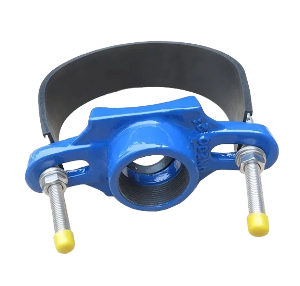
Flow meter accessories and parts keep flow meters accurate and in service. Replacement sensors, fittings, displays and kits extend meter life.
Parts Available
- Replacement sensors and rotors – restore accuracy
- Fittings and adapters – installation
- Remote displays – read meters from a distance
- Cables and connectors – signal wiring
- Calibration services – verify accuracy
Ordering Parts
Have your meter model and serial number ready. Some parts require factory calibration.
Centro supplies flow meter accessories and parts.
Related categories: Flow Meters | Sight Flow Indicators | Ultrasonic Flow Meters | Water Meters | Gas Flow Meters
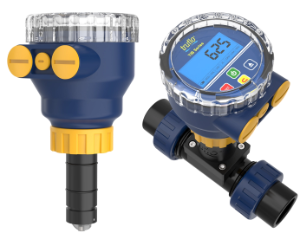
Turbine flow meters measure liquid flow by counting the rotation of a turbine rotor. They're accurate and responsive in clean, low-viscosity liquids such as water, fuels and light chemicals.
Turbine Meter Features
- High accuracy – suitable for batching and blending
- Wide turndown – broad flow range
- Pulse and analog outputs – connect to totalizers and controls
- Sanitary and stainless versions – food and chemical service
Installation Tips
Provide enough straight pipe upstream and downstream, and install a strainer to protect the rotor. Viscosity changes affect accuracy, so turbines suit consistent, clean fluids.
Centro supplies turbine flow meters for water, fuel and chemical measurement.
Related categories: Flow Meters | Roto Meters | Magnetic Flow Meters | Thermal Flow Meters
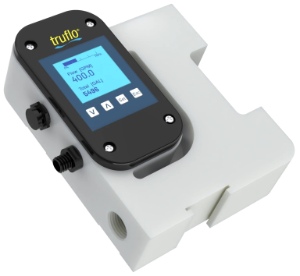
Ultrasonic flow meters use cutting-edge technology to precisely gauge the velocity of gas coursing through pipes. These meters employ transducers strategically positioned on opposite sides of the pipe. One transducer emits ultrasonic waves across the pipe, while its counterpart catches these waves. By timing the waves' journey upstream and downstream, these meters can accurately determine gas velocity. This data, when combined with the pipe's cross-sectional area, facilitates the calculation of gas flow rate. Renowned for their non-intrusive nature and versatility, ultrasonic flow meters find applications in various fields, including natural gas distribution, compressed air systems, and HVAC installations. Their appeal lies in their remarkable accuracy, wide turndown ratios, and low maintenance requirements, making them a preferred choice for gas flow measurement across industries. For further assistance and expert advice on selecting the right ultrasonic flow meter for your application, contact the product experts. They'll be glad to assist you.
Related categories: Flow Meters | Sight Flow Indicators | Water Meters | Accessories and Parts | Gas Flow Meters
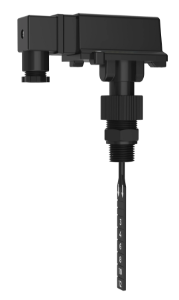
Flow switches monitor liquid or air flow and trigger alarms or shutdowns when flow is too low or too high. They protect pumps, heat exchangers, chillers and cooling systems.
Flow Switch Types
- Paddle flow switches – simple, rugged
- Thermal flow switches – no moving parts
- Piston and magnetic flow switches – precise set points
- Air flow switches – ducts and HVAC
Choosing a Switch
Select by media, flow range, pipe size, pressure and temperature. Adjustable set points add flexibility.
Centro supplies flow switches.
Related categories: Flow Control | Flow Transmitters | Flow Meters | Flow Sensors | Flow Control Accessories
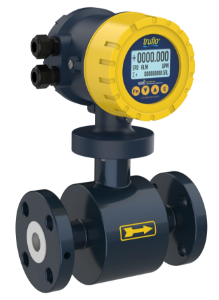
Magnetic flow meters are tools for measuring the flow of liquids in various industries. They work by using a magnetic field to determine the velocity of the fluid flowing through a pipe. One of the best things about these meters is their accuracy and reliability, especially when dealing with dirty or corrosive liquids. They're commonly used in water treatment plants, chemical processing, and even in food and beverage production because they have no moving parts and don't obstruct the flow, which means less maintenance and a longer lifespan. Have your pipe size, liquid and flow range handy, and our instrumentation team can help you size a mag meter and choose the right liner and electrode materials.
Related categories: Flow Meters | Turbine Flow Meters | Roto Meters | Anemometer Flow Meters
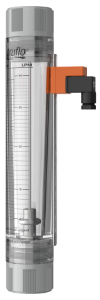
Rotameters, also called variable area flow meters, show flow with a float that rises in a tapered tube. They're simple, inexpensive and need no power, so they're widely used for purge flows, gas blending, water treatment and lab systems.
Rotameter Options
- Glass tube rotameters – clear visual indication
- Plastic and acrylic meters – water and low-pressure service
- Metal tube rotameters – high pressure, temperature and opaque fluids
- Integral needle valves – set and control flow
- Transmitters and alarms – add remote signals
Choosing a Rotameter
Rotameters are calibrated for specific fluids, pressures and temperatures, so provide your conditions for accurate scaling. Install vertically with flow upward. Metal tubes suit hazardous or high-pressure lines.
Centro supplies rotameters for liquid and gas flow indication.
Related categories: Flow Meters | Thermal Flow Meters | Turbine Flow Meters | Visual Flow Meters | Magnetic Flow Meters

Configure product to see pricing
Configure product to see pricing
Configure product to see pricing

Configure product to see pricing
Configure product to see pricing

Configure product to see pricing
Configure product to see pricing
$1,292.30$1,399.95
Subject to factory lead times

$349.86
Subject to factory lead times
$449.87
Subject to factory lead times
$549.87
Subject to factory lead times
$649.87
Subject to factory lead times
$749.87
Subject to factory lead times
$461.51$499.95
Subject to factory lead times
$507.66$549.95
Subject to factory lead times
$646.13$699.95
Subject to factory lead times
$738.44$799.95
Subject to factory lead times
$784.59$849.95
Subject to factory lead times
$830.75$899.95
Subject to factory lead times
$923.06$999.95
Subject to factory lead times
$1,107.68$1,199.95
Subject to factory lead times
$1,523.07$1,649.95
Subject to factory lead times
$1,615.38$1,749.95
Subject to factory lead times
$1,707.69$1,849.95
Subject to factory lead times
$3,738.51$4,049.95
Subject to factory lead times
$1,384.61$1,499.95
Subject to factory lead times
$1,476.92$1,599.95
Subject to factory lead times
Configure product to see pricing
Configure product to see pricing
Configure product to see pricing
Configure product to see pricing
Configure product to see pricing
Configure product to see pricing
Configure product to see pricing
$1,292.30$1,399.95
Subject to factory lead times
$349.86
Subject to factory lead times
$449.87
Subject to factory lead times
$549.87
Subject to factory lead times
$649.87
Subject to factory lead times
$749.87
Subject to factory lead times
$461.51$499.95
Subject to factory lead times
$507.66$549.95
Subject to factory lead times
$646.13$699.95
Subject to factory lead times
$738.44$799.95
Subject to factory lead times
$784.59$849.95
Subject to factory lead times
$830.75$899.95
Subject to factory lead times
$923.06$999.95
Subject to factory lead times
$1,107.68$1,199.95
Subject to factory lead times
$1,523.07$1,649.95
Subject to factory lead times
$1,615.38$1,749.95
Subject to factory lead times
$1,707.69$1,849.95
Subject to factory lead times
$3,738.51$4,049.95
Subject to factory lead times
$1,384.61$1,499.95
Subject to factory lead times
$1,476.92$1,599.95
Subject to factory lead times
- Measuring flow rate in a pipe requires a flow meter matched to the fluid type, pipe size, flow range, and accuracy requirement. For conductive liquids (water, chemicals, slurries), magnetic flow meters are the most popular choice — they have no moving parts, create no pressure drop, and handle dirty or abrasive fluids. For non-conductive liquids or retrofit installations where you can't cut the pipe, clamp-on ultrasonic flow meters mount externally and measure through the pipe wall. For applications requiring the highest accuracy or mass flow measurement (batching, custody transfer), Coriolis meters measure mass flow directly. For steam and gas, vortex meters are robust and widely used. For simple, low-cost local visual indication of flow rate, variable-area meters (rotameters) provide a direct reading without power or electronics. Flow switches are used when you only need to confirm flow is present or absent — for example, verifying cooling water is running before allowing a machine to start. The flow meter output (typically 4–20 mA) feeds back to a PLC or controller for monitoring, totalization, or closed-loop flow control.
- The flow meter technology must match the fluid type, pipe size, accuracy requirement, and process conditions. Magnetic (mag) flow meters measure conductive liquids (water, chemicals, slurries) using Faraday's law — they have no moving parts, handle dirty or abrasive fluids well, and are the default for water and wastewater applications. Ultrasonic flow meters (transit-time and Doppler) are non-intrusive and can be clamp-on, ideal for retrofit or applications where the pipe cannot be cut. Coriolis meters measure mass flow directly with very high accuracy — the premium choice for custody transfer, batching, and applications requiring density measurement. Vortex meters are robust and versatile for steam, gas, and liquid measurement in moderate-to-large pipe sizes. Variable-area meters (rotameters) provide simple, low-cost local visual indication of flow rate. Turbine meters offer high accuracy for clean, low-viscosity liquids. The best approach is to define the fluid properties, flow range, accuracy requirement, and installation constraints, then match to the technology that fits.
- A flow switch detects whether flow is present or absent (or above/below a threshold) and outputs a discrete on/off signal — it does not measure the actual flow rate. Flow switches are used for protection and alarm functions: confirming cooling water is flowing before allowing a machine to operate, detecting loss of lubrication flow to trigger a shutdown, or verifying that a pump is actually moving fluid. They are simpler and less expensive than flow meters. A flow meter, by contrast, measures the actual flow rate (GPM, liters/minute, SCFM, etc.) and provides a continuous analog or digital output proportional to the flow value. Flow meters are used when the control system needs to know how much fluid is flowing — for batching, dosing, energy accounting, and closed-loop flow control. If you only need to know whether flow is on or off, a flow switch is sufficient. If you need to know how much, you need a flow meter.
- A magnetic flow meter (mag meter) uses Faraday's law of electromagnetic induction to measure the velocity of a conductive liquid flowing through a pipe. The meter generates a magnetic field across the pipe, and the flowing conductive liquid produces a voltage proportional to its velocity — this voltage is measured by electrodes in the pipe wall and converted to a flow rate. Mag meters have several significant advantages: no moving parts (zero maintenance on the sensor itself), no obstruction to flow (full bore, no pressure drop), excellent performance with dirty, abrasive, and slurry-containing liquids, wide turndown ratios (typically 100:1 or greater), and bidirectional measurement capability. They are the standard choice for water and wastewater treatment, chemical processing, food and beverage, pharmaceutical, and pulp and paper applications. The main limitation is that the liquid must be electrically conductive (minimum ~5 µS/cm) — mag meters cannot measure hydrocarbons, deionized water, or gases.
- Flow meter sizing must balance accuracy, rangeability, and pressure drop. The meter should be sized so that the normal operating flow rate falls within the meter's optimal accuracy range — typically between 25% and 75% of its full-scale capacity. Sizing based solely on the pipe diameter is a common mistake — if the pipe is oversized for the actual flow rate (which is common in many installations), the flow velocity through the meter will be too low for accurate measurement. In these cases, the meter should be sized smaller than the pipe, with reducers and expanders installed to transition from the pipe size to the meter size. Key data needed for sizing includes the fluid type and properties (density, viscosity, conductivity, temperature, pressure), the minimum, normal, and maximum flow rates, the required accuracy, and the acceptable pressure drop. Most flow meter manufacturers provide online sizing tools where you input these parameters and receive a recommended meter size and model.