
Automation and Robotics - Ace Controls
What is Automation and Robotics?
Automation and Robotics involve leveraging technology to automate tasks and processes traditionally performed by people. This integration enhances efficiency ...

Dampeners, often referred to as dampers, are vital mechanical components employed in various engineering and industrial systems to control airflow, vibration, noise, and other dynamic factors. These devices are designed to mitigate the effects of sudden changes in flow, pressure, or force within a system. Common examples include HVAC dampers used to regulate airflow in heating and cooling systems, vibration dampeners in machinery to reduce vibrations and noise, and shock absorbers in automotive suspensions to provide a smoother ride. Dampeners function by dissipating or redirecting energy, helping maintain stability, reduce noise pollution, and enhance overall system performance. Their versatile applications across numerous industries make dampeners crucial for optimizing safety, comfort, and efficiency in various mechanical systems.
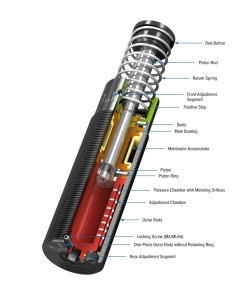
Industrial shock absorbers are precision devices designed to absorb kinetic energy and control deceleration in high-speed machinery, enhancing safety, extending equipment life, and reducing noise and vibration. Commonly used in automation, robotics, and heavy equipment, these components protect systems from impact damage during motion stops or collisions. With adjustable and self-compensating models available, industrial shock absorbers ensure smooth, repeatable performance in dynamic and high-cycle operations.
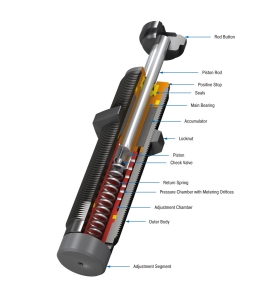
Miniature shock absorbers are compact energy-absorbing devices engineered to manage impact and deceleration in small-scale, high-speed automation and precision equipment. Ideal for robotics, medical devices, electronics assembly, and compact machinery, these shock absorbers provide smooth, controlled motion while minimizing wear, vibration, and noise. Despite their small size, they deliver reliable performance and protection in tight spaces where precision and durability are critical.

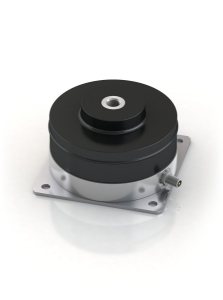
Safety accessories are crucial elements within industrial safety systems, enhancing the effectiveness of safety equipment and processes. These accessories include mounting brackets, enclosures, indicator lights, and reset keys. Safety accessories are designed to complement safety devices like switches, sensors, and controllers ensure proper installation, visibility, and ease of use. They support creating a comprehensive safety ecosystem that aligns with industry regulations and standards. By simplifying maintenance, improving visibility, and facilitating quick response actions, safety accessories contribute significantly to overall safety. Their integration elevates safety measures, minimizes risks, and fosters a secure industrial environment that prioritizes worker protection and equipment integrity.
Centro carries a complete selection of mounts available to purchase online. Mounts are used to support physical and position sensors and, therefore, must be selected based on the sensor's size, weight, configuration, and operating environment. Mounts can be classified into three broad categories: bases, knuckles, and links. Bases are the simplest mount type, typically used for small or lightweight sensors. Knuckles provide more flexibility than bases and are often used for larger or heavier sensors. Links provide the most significant amount of flexibility and can be used for sensors of all sizes. When selecting a mount, it is crucial to consider the operating environment. Mounts made from stainless steel or aluminum are often used in harsh environments, while plastic mounts are typically reserved for less demanding applications. No matter what your Mounting needs may be, Centro has the perfect solution for you. Please browse our website today to learn more.

Air preparation is an integral part of many industrial and commercial applications. At Centro, we carry a complete selection of air preparation products to meet your needs. Our combination air prep units include filters, regulators, and lubricators in a single compact unit. We also offer standalone air filters, FRL filters, and regulators. Whatever your air preparation needs, we have the products to get the job done right. Browse our website today to learn more about our air preparation products and how they can benefit your business or application.
Industrial Shock Absorbers are designed to protect your equipment from the harmful effects of shock and vibration. Shock absorbers are essential to many industrial applications, including packaging, material handling, and machine tooling. Gas springs and dampers are also commonly used in industrial applications to control heavy objects' movement or cushion impact. Shock absorbers are an essential component in many industries, and we are proud to offer a wide variety of products to meet the needs of our customers. At Centro, we carry a complete selection of shock absorbers available to purchase online. In addition to shock absorbers, we also carry gas springs, dampers, and shock-absorbing lanyards. We have the right solution whether you are looking for a single unit or a complete system. Contact us today to learn more about our products and how we can help you protect your investment.
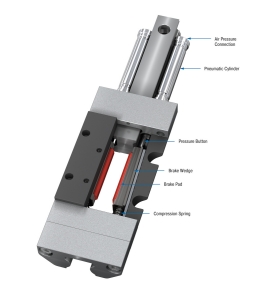
Pneumatic cylinders and actuators are used in a variety of industrial applications. Pneumatic cylinders and actuators use compressed air to create a force in a linear or rotary motion. Pneumatic cylinders come in various sizes and shapes and can be used for many different applications. Pneumatic cylinders and actuators are an essential part of many industries, and we are proud to offer our customers a wide selection of products. At Centro, we carry a complete selection of pneumatic cylinders and actuators, including rotary actuators and linear cylinders. Our pneumatic cylinders and actuators are available in various sizes and configurations, making it easy to find the perfect product for your application. Please browse our website or contact us today to learn more about our pneumatic cylinder and actuator offerings.
$72.32
$80.80
$80.80
$69.10
Subject to factory lead times
$184.46
$196.91
$70.84
$70.84
$257.34
Subject to factory lead times
$257.34
Subject to factory lead times
$269.63
Subject to factory lead times
$269.63
Subject to factory lead times
$72.32
$80.80
$80.80
$69.10
Subject to factory lead times
$184.46
$196.91
$70.84
$70.84
$257.34
Subject to factory lead times
$257.34
Subject to factory lead times
$269.63
Subject to factory lead times
$269.63
Subject to factory lead times
- Getting started with industrial automation begins with identifying the tasks that are repetitive, hazardous, labor-intensive, or quality-critical — these are the best candidates for automation. Common first steps include adding sensors for detection and feedback, installing pneumatic or electric actuators to replace manual movements, and using PLCs or smart relays to coordinate the sequence. For more advanced automation, industrial robots and collaborative robots (cobots) can handle pick-and-place, assembly, welding, palletizing, and packaging tasks with grippers and end-of-arm tooling (EOAT). Machine vision systems add inspection and quality control capabilities. Safety equipment — light curtains, safety switches, emergency stops, and guarding — is required to protect operators working near automated equipment. Centro's Automation and Robotics division offers products across all of these areas and can help you evaluate which tasks to automate first for the best return on investment.
- End-of-arm tooling (EOAT) refers to the device mounted on the end of a robotic arm that directly interacts with the workpiece — it is what allows the robot to grip, move, orient, and place parts. The most common EOAT type is the gripper, and selecting the right one depends on the workpiece material, shape, weight, and process requirements. Pneumatic grippers use compressed air and are the workhorse for general-purpose pick-and-place — they are fast, reliable, and available in parallel, angular, and three-finger configurations. Electric grippers use servo motors for programmable grip force and position, making them ideal for delicate or variable parts requiring precise control. Vacuum grippers use suction cups to handle flat, smooth, or irregularly shaped items like boxes, sheets, and glass without mechanical clamping. Magnetic grippers handle ferrous metal parts without contact mechanisms, offering quick cycle times for steel stamping and machining operations. Quick-change systems allow a single robot to swap between different EOAT types for multi-task flexibility.
- A collaborative robot — or cobot — is designed to work safely alongside human operators in a shared workspace without requiring safety fencing or caged enclosures. Cobots use built-in force and torque sensors, speed monitoring, and rounded, pinch-free designs to detect contact with a person and immediately stop or reverse motion, meeting ISO 10218 and ISO/TS 15066 safety standards. Traditional industrial robots operate at high speeds and forces behind safety guarding because they are not designed to detect or respond to human contact. Cobots are the right choice for applications that require human-robot interaction — tasks like machine tending, light assembly, quality inspection, and palletizing where an operator works nearby or hands off parts to the robot. They are also easier to program (often through hand-guiding or intuitive software), making them practical for small-batch and high-mix production where tasks change frequently. Traditional robots remain the better choice for high-speed, high-payload, or hazardous applications where human proximity is not needed.
- Industrial sensors detect physical conditions — presence, position, distance, temperature, pressure, level, and more — and convert them into electrical signals that PLCs and controllers use to make decisions. Selecting the right sensor starts with what you need to detect. Inductive proximity sensors detect metal objects at close range without contact and are the standard for detecting machine parts, cylinders at end-of-stroke, and metal targets on conveyors. Photoelectric sensors use light beams to detect objects at longer ranges and work on any material — through-beam, retroreflective, and diffuse types cover different range and mounting scenarios. Capacitive sensors detect both metallic and non-metallic materials including liquids, powders, and plastics, making them useful for level sensing through container walls. Ultrasonic sensors measure distance using sound waves, ideal for level measurement and position sensing of irregular surfaces. Beyond sensing type, consider the mounting environment — temperature, washdown exposure, vibration — and select the appropriate IP rating and housing material.
- Every automated or robotic work cell must include safety equipment to protect personnel from hazardous motion, in compliance with OSHA regulations and machine safety standards such as ANSI/RIA 15.06 and ISO 13849. The specific equipment depends on the risk assessment, but common components include safety light curtains that create an invisible detection field and stop the machine if a person enters the hazardous zone, safety laser scanners that monitor floor-level areas and can define warning and stop zones, safety interlock switches on access doors and gates that cut power when opened, emergency stop buttons placed within reach of operators, and safety-rated PLCs or safety relays that monitor all safety inputs and ensure the machine reaches a safe state before restarting. For collaborative robot applications, the cobot's built-in safety system may reduce the need for external guarding, but a thorough risk assessment is still required to determine whether additional measures — such as area scanners or reduced speed zones — are needed.