
Automation and Robotics
What is Automation and Robotics?
Automation and Robotics involve leveraging technology to automate tasks and processes traditionally performed by people. This integration enhances efficiency ...

Lubrication equipment is the unsung hero behind the seamless operation of machinery across diverse industries. Its significance lies in its ability to ensure optimal performance and durability of critical components. This versatile range of tools encompasses automated lubrication systems, the backbone of heavy machinery, and precision lubrication instruments designed for the most intricate mechanical parts. By mitigating friction and wear, lubrication equipment not only extends the lifespan of machinery but also safeguards against corrosion and dissipates excess heat, maintaining machinery efficiency at its peak. From gears that turn without a hitch to bearings that glide effortlessly, adequate lubrication is the linchpin of smooth machinery operation. Moreover, it goes beyond mere upkeep; it reduces downtime, cost savings, and heightened overall productivity. In the intricate world of machinery maintenance, lubrication equipment stands tall as the cornerstone of reliability and performance.
Related categories: Automation and Robotics | Configured Drives | Vision | Laser Markers | Robotics

Aluminum extrusion framing, often called T-slot, lets you build machine frames, guarding, workstations and carts without welding. Profiles bolt together with standard fasteners, so designs are easy to change and expand.
Aluminum Extrusion Products
- Extruded profiles – metric and inch series in many sizes
- Brackets and connectors – corner, gusset and anchor fasteners
- T-nuts and bolts – secure attachment anywhere in the slot
- Panels and doors – polycarbonate, mesh and solid panels
- Linear motion and casters – slides, bearings and mobile bases
Designing with Extrusion
Choose a profile series and size for your load and span. Plan connection methods early, and order profiles cut to length to save fabrication time. Extrusion frames are lightweight, clean and corrosion-resistant.
Centro supplies aluminum extrusion profiles and accessories and can help you choose the right profiles and accessories for frames and guarding.
Shop by type: Extruded Profiles | Accessories and Fasteners
Related categories: Automation and Robotics | Shock Absorbers | Safety Equipment | Air Preparation | Grippers/End of Arm Tooling

Industrial Shock Absorbers are designed to protect your equipment from the harmful effects of shock and vibration. Shock absorbers are essential to many industrial applications, including packaging, material handling, and machine tooling. Gas springs and dampers are also commonly used in industrial applications to control heavy objects' movement or cushion impact. Shock absorbers are an essential component in many industries, and we are proud to offer a wide variety of products to meet the needs of our customers. Centro offers miniature, industrial, safety and viscoelastic shock absorbers, along with gas springs, to bring moving loads to a smooth, controlled stop. In addition to shock absorbers, we also carry gas springs, dampers, and shock-absorbing lanyards. We have the right solution whether you are looking for a single unit or a complete system. Contact us today to learn more about our products and how we can help you protect your investment.
Shop by type: Gas Springs | Dampeners | Vibration Technology | Miniature Shock Absorbers | Safety Shock Absorbers | Viscoelastic Shock Absorbers | Industrial Shock Absorbers
Related categories: Automation and Robotics | Air Preparation | Aluminum Extrusion | Robotics | Safety Equipment

Air preparation conditions compressed air before it reaches valves, cylinders and tools. Removing contamination, controlling pressure and adding lubrication where needed extends component life and keeps pneumatic equipment running reliably.
Air Preparation Products
- Filters – particulate and coalescing filtration
- Regulators – maintain steady downstream pressure
- Lubricators – add oil mist for lubricated components
- Filter/regulator combos and FRL units – space-saving modular assemblies
- Strainers, accessories and repair kits – protect and maintain units
Building an Air Prep Unit
Size units to the machine's peak air flow, not just port size. Install filters first, then the regulator, then a lubricator if required. Add shutoff and soft-start valves for safety, and drain filters regularly or use auto drains.
Centro carries air preparation components from leading pneumatic brands.
Shop by type: Strainers | Filters | Regulators | Lubricators | Filter/Regulators Combo | Air Preparation Miscellaneous Products | Air Preparation Repair Kits | Filter/Regulator/Lubricator Combo
Related categories: Automation and Robotics | Robotics | Shock Absorbers | Laser Markers | Aluminum Extrusion

Motion control manages the movement of machine axes, controlling position, speed and torque. It's at the heart of packaging machines, robotics, CNC equipment, conveyors and automated assembly.
Motion Control Components
- Servo motors and drives – high-performance closed-loop motion
- Stepper motors – economical, accurate positioning
- Motion controllers – coordinate multiple axes
- Gearboxes – match torque and speed to the load
- Feedback devices and cables – encoders and connections
Planning a Motion System
Define each axis's load, speed, accuracy and duty cycle. Then size motors and drives, and choose communication such as EtherCAT, EtherNet/IP or PROFINET. Sizing software helps confirm torque and inertia margins.
Centro supplies servo and drive components and can help you choose the right combination for your motion application.
Shop by type: Servo
Related categories: Automation and Robotics | Mounts | Bar Code Scanners | Grippers/End of Arm Tooling | Vacuum Components

From sensor brackets and knuckles to bases, links and leveling feet, Centro has the mounting components to build sturdy, adjustable fixtures for your machines. Mounts are used to support physical and position sensors and, therefore, must be selected based on the sensor's size, weight, configuration, and operating environment. Mounts can be classified into three broad categories: bases, knuckles, and links. Bases are the simplest mount type, typically used for small or lightweight sensors. Knuckles provide more flexibility than bases and are often used for larger or heavier sensors. Links provide the most significant amount of flexibility and can be used for sensors of all sizes. When selecting a mount, it is crucial to consider the operating environment. Mounts made from stainless steel or aluminum are often used in harsh environments, while plastic mounts are typically reserved for less demanding applications. No matter what your Mounting needs may be, we have the perfect solution for you. Please browse our website today to learn more.
Shop by type: Knuckles | Plates | Leveling Mounts | Sensor Mounts | Bases | Links
Related categories: Automation and Robotics | Grippers/End of Arm Tooling | Motion Control | Safety Equipment | Bar Code Scanners

Conveyors are essential pieces of equipment in many industrial and manufacturing facilities. They can be used to move materials from one place to another or to transport heavy loads from one stage of the production process to the next. We carry a complete selection of conveyors, including flexible chain conveyors, powered roller conveyors, and slider bed conveyors. We also offer a variety of accessories and replacement parts, so you can keep your conveyors running smoothly. Whether you need a new conveyor for your facility, or are looking for replacement parts for an existing system, please browse our website for all your conveyor needs.
Shop by type: Flexible Chain Conveyors | Powered Roller Conveyors | Slider Bed
Related categories: Automation and Robotics | Vacuum Components | Automation & Robotics Sensors | Bar Code Scanners | Motion Control

Barcode scanners speed up data capture in warehouses, production lines, shipping and inventory management. Reading codes accurately cuts manual entry errors and gives you real-time tracking of parts, products and assets.
Scanner Types
- Fixed mount scanners – automated reading on conveyors and machines
- Handheld scanners – corded and cordless for picking, receiving and assembly
- 1D and 2D imagers – read barcodes, QR codes and Data Matrix
- DPM readers – read direct part marks on metal and plastic
- Rugged models – drop- and dust-resistant for industrial use
Choosing a Scanner
Consider the code types, size and print quality, the read distance, and how fast items move. Check interface options (USB, Ethernet, PROFINET, EtherNet/IP) for your system. For high-speed lines, verify read rate and field of view.
Centro carries barcode scanners for industrial automation and logistics applications.
Shop by type: Fixed Mount Scanners | Handheld Scanners
Related categories: Automation and Robotics | Motion Control | Vacuum Components | Mounts | Conveyors
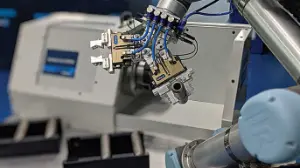
Grippers and end-of-arm tooling (EOAT) are vital in robotic and automated systems due to their versatility and customization. They handle tasks from simple pick-and-place to complex assembly and packaging, making them suitable for various industries. By integrating EOAT, robots perform repetitive tasks more efficiently and quickly than humans, boosting productivity. The precision of EOAT ensures high-quality outcomes and reduces errors, vital for sectors like electronics, pharmaceuticals, and automotive manufacturing. EOAT enhances workplace safety by taking over dangerous, heavy, or repetitive tasks, improving ergonomics and reducing the risk of injury. We offer a complete selection of grippers and end-of-arm tooling (EOAT) products. Our wide range of grippers ensures that you can find the ideal solution for any specific application.
What types of grippers do we provide, and what do they do?
- Pneumatic Grippers: Ideal for applications requiring a high degree of skill, these grippers use compressed air to handle objects precisely and flexibly.
- Angular Grippers: Used for picking up objects from inclined surfaces, these grippers can grasp items at various angles, making them versatile for complex tasks.
- 4-Finger Grippers: Provide a wide range of motion and allow for the delicate handling of small parts. They are instrumental in applications requiring gentle manipulation and high precision.
- O-Ring Grippers: Perfect for applications requiring frequent part or tool replacement, these grippers are designed to handle O-rings and similar objects efficiently and with minimal wear.
- Magnetic Grippers: Utilize magnetic force to lift and move heavy materials, offering a reliable and efficient solution for handling metal objects.
- Vacuum Grippers: Use suction to pick up and transport objects, ideal for handling smooth, non-porous surfaces and delicate items.
- Electrical Grippers: Provide precise control and easy integration with various robotic systems, suitable for applications requiring accurate and repeatable gripping.
- Gripper Accessories: Enhance the functionality and versatility of grippers, including items such as finger kits, sensors, and mounting brackets.
Why should I choose us for end-of-arm tooling (EOAT)?
We offer a diverse selection of high-quality EOAT products that cater to various industrial needs. Whether you need precision, versatility, or specialized solutions, we have the right gripper for your robotic automation needs.
Unsure what product(s) you need for your application and need help?
Contact us to speak to a product expert to assist you in every step of the way from product selection to installing.
Shop by type: Pneumatic Gripper | Flexible Grippers | Magnetic Grippers | Vacuum Grippers | Gripper Accessories | Electrical Grippers
Related categories: Automation and Robotics | Safety Equipment | Mounts | Aluminum Extrusion | Motion Control
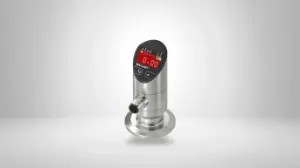
Sensors are the eyes and ears of any automated line. They tell a PLC when a part has arrived, how far away an object is, whether a cylinder has finished its stroke, or if a guard door is open. Choosing the right sensing technology for the target material, distance and environment is usually what separates a reliable machine from one that needs constant babysitting.
Sensor Types We Carry
- Photoelectric sensors for through-beam, retroreflective and diffuse detection over long ranges
- Inductive and capacitive proximity sensors for metal and non-metal targets at close range
- Magnetic cylinder sensors that confirm piston position without extra mechanical switches
- Fiber optic, ultrasonic and distance sensors for tight spaces, clear objects and measurement
- Inclination, detection and ranging sensors for mobile equipment and positioning
How to Choose
Start with the target: what it's made of, its size and color, and how far it sits from the sensor. Then consider output type (PNP, NPN, IO-Link or analog), housing size, connector style and washdown or temperature ratings. Cables, connectors and mounting brackets are available to finish the installation.
Not sure which technology fits? Centro's automation team can review your application and recommend a sensor that will work the first time.
Shop by type: Magnetic Cylinder Sensors | Photoelectric Sensors | Inclination Sensors | Sensor Adapters | Sensor Cables | Sensor Connectors | Detection and Ranging Sensors | Fiber Optic Sensors
Related categories: Automation and Robotics | Conveyors | Vacuum Components | Bar Code Scanners | Motion Control
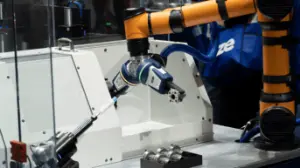
Robotics is a rapidly growing field in industrial settings, and there is an increasing demand for Robotics products and solutions in manufacturing settings. Industrial Robotics is the application of robots in an industrial environment. You will find industrial robotics in all industries, including automotive, food and beverage, pharmaceuticals, and electronics. Robotics offers many advantages over traditional manufacturing methods, including increased productivity, accuracy, and safety. Centro supplies industrial robots, robot accessories and automation tooling, and our team can help you select the right robot and accessories for your parts and cycle time.
Shop by type: Robots | Robot Accessories | Automation/Tooling
Related categories: Automation and Robotics | Laser Markers | Air Preparation | Vision | Shock Absorbers

Laser markers permanently mark logos, serial numbers, barcodes, dates and part data on metal, plastic, glass and other materials. Laser marking is fast, needs no inks or consumables and produces crisp, durable marks for traceability.
Laser Marker Types
- Fiber lasers – metals and many plastics
- CO2 lasers – wood, glass, paper, cardboard and organics
- UV lasers – fine, low-heat marks on sensitive plastics
- Inline marking systems – integrate with conveyors and automation
- Workstations and enclosures – Class 1 safe operation
Choosing a Laser
Material type decides the laser wavelength. Consider mark content, speed, field size and integration needs. Fume extraction and proper safety enclosures are essential. Sample marking on your parts is the best way to confirm results.
Centro offers laser marking systems and can help you choose the right laser type for your material and marking needs.
Related categories: Automation and Robotics | Vision | Robotics | Lubrication Equipment | Air Preparation

Centro carries vision sensors, smart cameras, controllers, lighting and lenses for inspection, guidance and code reading on automated lines. Vision Surveillance is the technology used to monitor and detect an area's activities: Smart Cameras capture and process images to be relayed to a Vision Controller. Vision Controllers are special computers designed to integrate and coordinate smart cameras in a surveillance system. A machine vision system is an assembly of integrated electronic components, computer hardware, and software that provides operational guidance to industrial processes by processing and analyzing the captured images from its environment. Lastly, an industrial Surveillance System is a complete package that pulls all these technologies together to create a cohesive whole. With our wide online selection, customers are sure to find a suitable visual surveillance component for their needs.
Shop by type: Smart Cameras | Vision Controllers | Vision Accessories | Vision Sensors
Related categories: Automation and Robotics | Lubrication Equipment | Laser Markers | Configured Drives | Robotics

Safety equipment offers a comprehensive suite of solutions dedicated to enhancing workplace safety and equipment protection. This lineup includes vital components such as safety switches, sensors, pull cords, emergency stops, safety accessories, and intrinsically safe barriers. Each element is engineered to detect potential hazards, swiftly respond to unsafe conditions, and ensure workers' well-being and equipment integrity. Safety switches and sensors prevent accidents by detecting unsafe situations, while pull cords and emergency stops provide immediate shutdown options. Safety accessories enhance the ecosystem, and intrinsically safe barriers enable secure operations in hazardous environments. By integrating this advanced safety equipment, industries prioritize worker safety, minimize risks, and create secure, productive work environments.
Shop by type: Fencing and Guarding | Safety Control Devices | Light Curtain | Laser Scanner | Safety Pneumatic Valves | Safety Switches | Safety Sensors | Pull Cords and Emergency Stops
Related categories: Automation and Robotics | Aluminum Extrusion | Grippers/End of Arm Tooling | Shock Absorbers | Mounts

Vacuum components let automated equipment pick, hold and place parts using suction. Vacuum handling is common in packaging, sheet metal, glass, wood and electronics, and works best when every component in the system is sized to work together.
Vacuum Components We Carry
- Vacuum generators and ejectors – create vacuum from compressed air with no pump required
- Vacuum suction cups – flat, bellows and specialty cups in many materials
- Vacuum switches – confirm a part is gripped before the robot moves
- Vacuum regulators – hold a steady vacuum level for delicate parts
- Fittings, filters and hose – keep the system leak-free and clean
Designing a Vacuum System
Start with the part's weight, surface and porosity, then choose cup size and quantity with a safety factor for acceleration. Porous parts like cardboard need higher-flow generators. Fit a vacuum switch or sensor to confirm the grip and an inline filter to protect generators from dust.
Centro can help you select vacuum cups, generators and switches that hold parts securely and use as little compressed air as possible.
Shop by type: Vacuum Regulators | Vacuum Switches | Vacuum Generators | Vacuum Suction Cups
Related categories: Automation and Robotics | Bar Code Scanners | Conveyors | Motion Control | Automation & Robotics Sensors
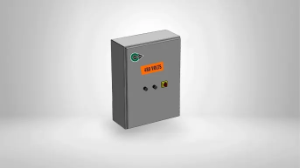
Configured drives are tailored drive systems designed to meet specific application needs in industrial settings. Configured Drives combine motors, variable frequency drives (VFDs), and control components into a single package, simplifying installation and operation. By pre-configuring the drive parameters, they save time on setup and provide optimal performance right out of the box. Configured drives are particularly valuable in applications where precise speed control, energy efficiency, and seamless integration with existing systems are critical. They also often include advanced features like remote monitoring and diagnostics, making them a reliable choice for demanding environments like manufacturing, HVAC, or material handling. Browse the options below or contact us to speak with a product expert who can help you choose the right configured drive.
Related categories: Automation and Robotics | Lubrication Equipment | Vision | Laser Markers | Robotics

$2,250.59
Subject to factory lead times
$2,405.05
Subject to factory lead times
$2,560.51
Subject to factory lead times
$2,712.00
Subject to factory lead times
$1,115.90
Subject to factory lead times
$1,272.33
Subject to factory lead times
$1,426.79
Subject to factory lead times
$1,578.29
Subject to factory lead times
$1,731.76
Subject to factory lead times
$2,040.68
Subject to factory lead times
$2,195.14
Subject to factory lead times
$2,346.64
Subject to factory lead times
$2,808.04
Subject to factory lead times
$2,655.57
Subject to factory lead times
$2,501.10
Subject to factory lead times
$2,962.50
Subject to factory lead times
$954.50
Subject to factory lead times
$1,155.50
Subject to factory lead times
$1,358.48
Subject to factory lead times
$1,559.48
Subject to factory lead times
$1,763.44
Subject to factory lead times
$1,962.47
Subject to factory lead times
$2,165.44
Subject to factory lead times
$2,366.44
Subject to factory lead times
- Getting started with industrial automation begins with identifying the tasks that are repetitive, hazardous, labor-intensive, or quality-critical — these are the best candidates for automation. Common first steps include adding sensors for detection and feedback, installing pneumatic or electric actuators to replace manual movements, and using PLCs or smart relays to coordinate the sequence. For more advanced automation, industrial robots and collaborative robots (cobots) can handle pick-and-place, assembly, welding, palletizing, and packaging tasks with grippers and end-of-arm tooling (EOAT). Machine vision systems add inspection and quality control capabilities. Safety equipment — light curtains, safety switches, emergency stops, and guarding — is required to protect operators working near automated equipment. Centro's Automation and Robotics division offers products across all of these areas and can help you evaluate which tasks to automate first for the best return on investment.
- End-of-arm tooling (EOAT) refers to the device mounted on the end of a robotic arm that directly interacts with the workpiece — it is what allows the robot to grip, move, orient, and place parts. The most common EOAT type is the gripper, and selecting the right one depends on the workpiece material, shape, weight, and process requirements. Pneumatic grippers use compressed air and are the workhorse for general-purpose pick-and-place — they are fast, reliable, and available in parallel, angular, and three-finger configurations. Electric grippers use servo motors for programmable grip force and position, making them ideal for delicate or variable parts requiring precise control. Vacuum grippers use suction cups to handle flat, smooth, or irregularly shaped items like boxes, sheets, and glass without mechanical clamping. Magnetic grippers handle ferrous metal parts without contact mechanisms, offering quick cycle times for steel stamping and machining operations. Quick-change systems allow a single robot to swap between different EOAT types for multi-task flexibility.
- A collaborative robot — or cobot — is designed to work safely alongside human operators in a shared workspace without requiring safety fencing or caged enclosures. Cobots use built-in force and torque sensors, speed monitoring, and rounded, pinch-free designs to detect contact with a person and immediately stop or reverse motion, meeting ISO 10218 and ISO/TS 15066 safety standards. Traditional industrial robots operate at high speeds and forces behind safety guarding because they are not designed to detect or respond to human contact. Cobots are the right choice for applications that require human-robot interaction — tasks like machine tending, light assembly, quality inspection, and palletizing where an operator works nearby or hands off parts to the robot. They are also easier to program (often through hand-guiding or intuitive software), making them practical for small-batch and high-mix production where tasks change frequently. Traditional robots remain the better choice for high-speed, high-payload, or hazardous applications where human proximity is not needed.
- Industrial sensors detect physical conditions — presence, position, distance, temperature, pressure, level, and more — and convert them into electrical signals that PLCs and controllers use to make decisions. Selecting the right sensor starts with what you need to detect. Inductive proximity sensors detect metal objects at close range without contact and are the standard for detecting machine parts, cylinders at end-of-stroke, and metal targets on conveyors. Photoelectric sensors use light beams to detect objects at longer ranges and work on any material — through-beam, retroreflective, and diffuse types cover different range and mounting scenarios. Capacitive sensors detect both metallic and non-metallic materials including liquids, powders, and plastics, making them useful for level sensing through container walls. Ultrasonic sensors measure distance using sound waves, ideal for level measurement and position sensing of irregular surfaces. Beyond sensing type, consider the mounting environment — temperature, washdown exposure, vibration — and select the appropriate IP rating and housing material.
- Every automated or robotic work cell must include safety equipment to protect personnel from hazardous motion, in compliance with OSHA regulations and machine safety standards such as ANSI/RIA 15.06 and ISO 13849. The specific equipment depends on the risk assessment, but common components include safety light curtains that create an invisible detection field and stop the machine if a person enters the hazardous zone, safety laser scanners that monitor floor-level areas and can define warning and stop zones, safety interlock switches on access doors and gates that cut power when opened, emergency stop buttons placed within reach of operators, and safety-rated PLCs or safety relays that monitor all safety inputs and ensure the machine reaches a safe state before restarting. For collaborative robot applications, the cobot's built-in safety system may reduce the need for external guarding, but a thorough risk assessment is still required to determine whether additional measures — such as area scanners or reduced speed zones — are needed.