
Sensors
At Centro, we carry a complete selection of sensors for all your industrial needs. Whether you're looking for a Detection Sensor to help with the early detection of potential problems or a Gas Detection Sensor...
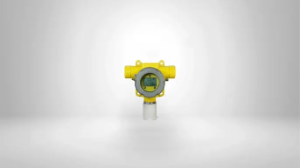
Gas detection sensors are devices used to detect and monitor the presence of gases in the environment. They utilize various technologies, such as electrochemical, infrared, or semiconductor, to detect specific gases or measure overall air quality. Gas detection sensors find applications in industries like manufacturing, oil and gas, mining, or environmental monitoring, ensuring worker safety and preventing potential hazards. They provide reliable and timely gas detection, triggering alarms or activating safety measures to mitigate risks associated with gas leaks or hazardous atmospheres.
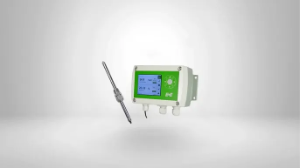
Humidity sensors are used to measure and monitor relative humidity levels in the air. Humidity sensors detect moisture content in the atmosphere and convert it into electrical signals for humidity monitoring systems. Browse our selection below or contact us to speak with a product expert.
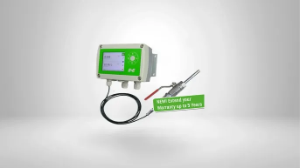
Moisture in oil sensors are used to detect and measure water content or moisture levels in oils and lubricants. These sensors employ various technologies such as capacitance, resistive, or optical methods to analyze moisture content in oil samples. Browse our selection below or contact us to speak with a product expert.
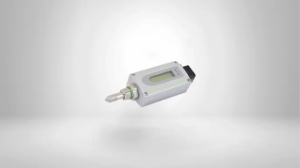
Dew point sensors are devices used to measure the temperature at which air becomes saturated with moisture, causing dew to form. These sensors detect and calculate the dew point temperature based on humidity levels in the air. Dew point sensors help provide optimal conditions for operations, prevent condensation-related damage, and support efficient energy management by monitoring moisture levels accurately. Browse our selection below or contact us to speak with a product expert.

$179.13
Subject to factory lead times

$155.74
Subject to factory lead times
$232.46
Subject to factory lead times
$200.32
Subject to factory lead times
$151.72
Subject to factory lead times

$552.77
Subject to factory lead times
$220.34
Subject to factory lead times

$515.94$635.00

$366.44$451.00

$380.71$456.85
Subject to factory lead times

$443.75$532.50
Subject to factory lead times

$380.71$456.85
Subject to factory lead times
$179.13
Subject to factory lead times
$155.74
Subject to factory lead times
$232.46
Subject to factory lead times
$200.32
Subject to factory lead times
$151.72
Subject to factory lead times
$552.77
Subject to factory lead times
$220.34
Subject to factory lead times
$515.94$635.00
$366.44$451.00
$380.71$456.85
Subject to factory lead times
$443.75$532.50
Subject to factory lead times
$380.71$456.85
Subject to factory lead times
- Industrial process sensors detect and measure physical variables — temperature, pressure, humidity, and more — and convert them into electrical signals for monitoring and control systems. Key types include temperature sensors (thermocouples and RTDs that measure heat in pipes, tanks, and equipment), pressure sensors and transmitters (piezoelectric, capacitive, and strain gauge elements that measure pressure in process lines and vessels), humidity sensors (capacitive and resistive elements that measure moisture content in air for HVAC, drying, storage, and cleanroom applications), and level sensors (conductivity probes, ultrasonic, and capacitance sensors that detect liquid levels in tanks and vessels). Centro carries a wide selection of sensors for process measurement applications across chemical, water treatment, food and beverage, pharmaceutical, and general manufacturing industries.
- Humidity sensor selection depends on the measurement environment, accuracy requirements, and operating conditions. Capacitive humidity sensors are the most common type for industrial applications — they measure relative humidity by detecting changes in the dielectric constant of a thin polymer film as it absorbs or releases moisture. They offer good accuracy (typically ±2–3% RH), a wide measurement range (0–100% RH), and reasonable cost. For polluted or condensing environments, dual-probe designs are available that heat the sensing element to prevent condensation from forming and can clean themselves by heating to remove foreign material buildup. For intrinsically safe areas where flammable gases or vapors may be present, specialized humidity sensors with appropriate certifications (requiring a safety barrier like a Stahl barrier) are available. Key specifications to evaluate include accuracy, response time, operating temperature range, whether the sensor includes integrated temperature compensation, and the output signal type (4–20 mA, voltage, or digital).
- A sensor is the physical element that detects and responds to a process variable — for example, a thermocouple generates a millivolt signal in response to temperature, or a pressure diaphragm deflects in proportion to applied pressure. The sensor produces a raw, often low-level signal that is susceptible to electrical noise and not directly usable by most control systems over long distances. A transmitter takes the sensor's raw signal, amplifies it, conditions it (linearizes, compensates for environmental effects), and converts it into a standard industrial output — typically 4–20 mA analog or a digital protocol like HART, Modbus, or IO-Link — that can travel over long cable runs to a PLC, DCS, or recorder with minimal signal degradation. In many modern instruments, the sensor and transmitter are combined in a single housing (an integrated transmitter), but they can also be separate devices — especially when the sensor must be located in a harsh environment while the transmitter electronics are mounted in a safer location.
- Yes, but they must be certified for the specific hazardous area classification. In locations where flammable gases, vapors, or combustible dusts may be present, sensors and their associated wiring must meet explosion protection standards to prevent ignition. The most common approach for low-power sensors is intrinsic safety (IS) — the sensor is connected through an IS barrier (zener barrier or galvanic isolator) that limits the electrical energy in the hazardous area to levels too low to ignite the atmosphere. The sensor itself must be IS-certified, and the barrier must be properly installed in the safe area. For higher-power devices, explosion-proof enclosures or increased safety housings may be used. Always verify that the sensor's certification (FM, CSA, ATEX, IECEx) matches the area classification (Class/Division or Zone), gas group, and temperature class of your installation. Centro carries sensors designed for intrinsically safe applications, including humidity sensors that work with Stahl or equivalent safety barriers.
- Start by checking the basics: verify the sensor is properly connected (loose wires are the most common cause of erratic signals), confirm the wiring is correct (correct polarity for thermocouples, correct lead configuration for RTDs), and inspect the cable for damage, moisture intrusion, or corrosion. Next, check the process conditions — is the sensor actually exposed to the variable it's measuring? A thermocouple that has pulled out of its thermowell won't read process temperature accurately. If the sensor is reading but inaccurate, it may need recalibration — compare its reading against a known reference (calibrated test instrument) at one or more points across its range. If the reading is noisy or jumps around, electrical interference from nearby VFDs, motors, or power cables may be coupling into the signal wiring — ensure shielded cable is used with the shield grounded at one end only, and route signal cables away from power cables. If the sensor is slow to respond, check for buildup or fouling on the sensing element. Replace sensors that show signs of physical damage, drift beyond acceptable limits, or have exceeded their recommended service life.