
Instrumentation, Measurement and Control - ICON Process Controls
Instrumentation refers to devices that measure or control physical variables such as temperature, level, flow, or pressure. These products are essential in the industry because they allow for maximum output with mi...
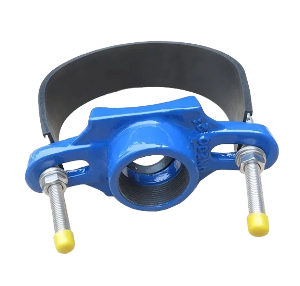
Flow meter accessories and parts keep flow meters accurate and in service. Replacement sensors, fittings, displays and kits extend meter life.
Parts Available
- Replacement sensors and rotors – restore accuracy
- Fittings and adapters – installation
- Remote displays – read meters from a distance
- Cables and connectors – signal wiring
- Calibration services – verify accuracy
Ordering Parts
Have your meter model and serial number ready. Some parts require factory calibration.
Centro supplies flow meter accessories and parts.
Related categories: Flow Meters | Sight Flow Indicators | Ultrasonic Flow Meters | Water Meters | Gas Flow Meters
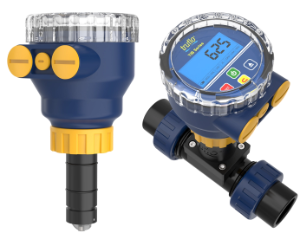
Turbine flow meters measure liquid flow by counting the rotation of a turbine rotor. They're accurate and responsive in clean, low-viscosity liquids such as water, fuels and light chemicals.
Turbine Meter Features
- High accuracy – suitable for batching and blending
- Wide turndown – broad flow range
- Pulse and analog outputs – connect to totalizers and controls
- Sanitary and stainless versions – food and chemical service
Installation Tips
Provide enough straight pipe upstream and downstream, and install a strainer to protect the rotor. Viscosity changes affect accuracy, so turbines suit consistent, clean fluids.
Centro supplies turbine flow meters for water, fuel and chemical measurement.
Related categories: Flow Meters | Roto Meters | Magnetic Flow Meters | Thermal Flow Meters

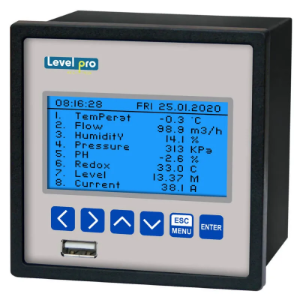
Panel meters and displays turn signals from transmitters, sensors and electrical circuits into clear readings on a control panel. Operators can see flow, temperature, pressure, level, speed or current at a glance, and many models also provide alarms and retransmitted outputs.
Display Options
- Process meters – read 4-20 mA and 0-10 V signals in engineering units
- Electrical meters – AC/DC voltage, current and power
- Temperature displays – direct thermocouple and RTD inputs
- Rate and totalizer meters – flow rate, totals and counts from pulse inputs
- Large-digit displays – visible across the plant floor
Choosing a Meter
Match the input type and range, then decide whether you need relay alarms, analog retransmission or serial communication. Check the panel cutout size (1/8 DIN is common), power supply and front-panel rating for washdown areas. Loop-powered meters are useful where no separate power is available.
Centro carries panel meters and displays from leading instrumentation brands and can help you match one to your signal.
Related categories: Controllers | PID
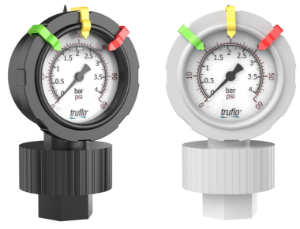
We offer pressure gauges, vital instruments that measure and indicate fluid or gas pressure within a system. These gauges are commonly employed in various industries, including manufacturing, oil and gas, automotive, and HVAC systems. Pressure gauges consist of a dial or digital display that shows the pressure reading and a sensing element that detects the pressure and converts it into a readable form. They come in different types, such as Bourdon tube gauges, diaphragm gauges, and digital pressure gauges, each suited for specific applications and pressure ranges. Pressure gauges provide crucial information for monitoring and controlling processes, ensuring optimal performance and safety. They enable operators to gauge system pressure levels, detect abnormalities, and make informed decisions regarding system adjustments or maintenance. Pressure gauges may also incorporate features such as maximum pressure indicators, adjustable pointers, or alarms for added functionality. With their accuracy, reliability, and ease of use, pressure gauges are crucial in maintaining operational efficiency and safety in various industries.
Shop by type: Boiler Gauges | Manometers | Pressure Gauges | Gauge Parts & Accessories | Tridicators
Related categories: Pressure Control | Pressure Switch | Pressure Control Accessories | Pressure Transmitters | Pressure Transducers

Liquid level control measures and manages the level of liquids in tanks, sumps and vessels. Reliable level control prevents overflows, protects pumps and keeps inventory and processes running smoothly.
Liquid Level Products
- Float switches – simple point level control
- Level switches and sensors – vibrating, optical and capacitive
- Level transmitters – continuous measurement
- Radar level – non-contact continuous level
- Differential pressure level – pressurized vessels
Choosing a Solution
Decide between point and continuous measurement, then consider liquid properties, tank conditions and mounting. Many tanks use a transmitter for control plus a separate high-level switch for safety.
Centro supplies liquid level control instruments for water, wastewater and process tanks.
Shop by type: Float Switches | Level Transmitters | Float Switch | Radar | Differential Pressure Control | Level Switches | Level Sensors | Water Gauges
Related categories: Level Control | Bulk Solids
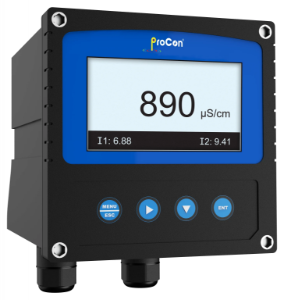
Conductivity analytical tools play a pivotal role in measuring the ability of a solution to conduct electric current, providing valuable insights into the concentration of dissolved ions. These tools are widely used in various scientific, industrial, and environmental applications to assess the purity and composition of liquids. The principle underlying conductivity measurements involves the detection of ions, which enhance electrical conductivity in a solution. The greater the concentration of ions, the higher the conductivity. Commonly employed in water quality testing, pharmaceutical manufacturing, and chemical process control, conductivity analytical tools assist in monitoring the effectiveness of water treatment processes, ensuring compliance with regulatory standards, and maintaining the integrity of industrial processes. The versatility of conductivity measurements extends to applications such as detecting contaminants, assessing the salinity of water bodies, and optimizing the efficiency of chemical reactions. Regular calibration and maintenance are essential to ensure the accuracy and reliability of conductivity analytical tools, contributing to their indispensable role in analytical chemistry and industrial quality control.
Shop by type: Conductivity Probes | Conductivity Transmitters
Related categories: Analytical Tools | pH
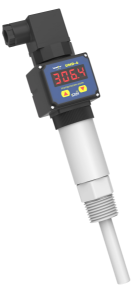
We carry a complete selection of temperature measurement, instrumentation, and control devices to suit any industrial or commercial application. For various reasons, temperature measurement, instrumentation, and Control products are critical to industrial systems. Thermocouples, for example, are used extensively in industry to measure temperatures in a wide range of applications. Temperature switches are used to control the temperature of a process or system. All three of these products are essential to properly functioning industrial systems. Whether you need a simple temperature gauge for an easy fix or a sophisticated control system for a large factory, we have the products and expertise to meet your needs. Thermocouples, temperature switches, thermometers, and transmitters are available online, and our knowledgeable staff is always on hand to answer any questions. So please browse our selection today and find the perfect solution for your temperature monitoring needs.
Shop by type: Heat Exchangers | Temperature Accessories | Thermometers | Thermocouples and RTDs | Temperature Switches | Temperature Controllers | Temperature Recording | Temperature Transmitters
Related categories: Instrumentation, Measurement and Control | PVF | Level Control | Swivel Joints | Analytical Tools
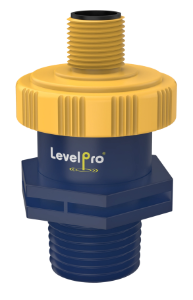
Pressure transmitters send accurate pressure readings to your control system over long distances. They're the standard instrument for process monitoring, control loops and safety systems.
Transmitter Types
- Gauge and absolute transmitters – line pressure measurement
- Differential pressure transmitters – flow, level and filter monitoring
- Smart transmitters – HART and digital communication
- Remote seal transmitters – hot, viscous or corrosive media
- Hazardous area models – explosion-proof and intrinsically safe
Choosing a Transmitter
Select range, accuracy, process connection and wetted materials. Consider output, display and approvals. Manifolds simplify installation and calibration.
Centro supplies pressure transmitters and manifolds for process measurement.
Related categories: Pressure Control | Pressure Regulators | Pressure Switch | Sequence Valves | Gauges
Conductivity transmitters convert conductivity probe signals into a standard output for controllers and displays. They're used to monitor water purity, chemical concentration, boiler blowdown and cooling tower cycles.
Transmitter Features
- 4-20 mA and digital outputs – connect to PLCs and SCADA
- Temperature compensation – accurate readings across temperatures
- Concentration curves – display % acid or caustic
- Relay alarms – control blowdown and dosing
- Panel and field mounting – flexible installation
Choosing a Transmitter
Match the transmitter to your probe type (contacting or toroidal) and range. Consider display, outputs, power and enclosure rating.
Centro supplies conductivity transmitters and probes for water and chemical monitoring.
Related categories: Conductivity | Conductivity Probes
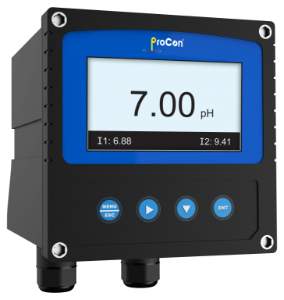
pH transmitters play a crucial role in the field of analytical instrumentation by converting electrical signals from pH probes into usable data for monitoring and control systems. These devices enhance the functionality of pH measurement tools, such as pH electrodes or probes, by amplifying and transmitting the signals they generate. pH transmitters are essential in industrial processes where maintaining a specific pH level is critical for product quality or process efficiency. These transmitters not only provide accurate and continuous pH readings but also offer additional features such as data logging, remote access, and integration with control systems. This allows for real-time monitoring and adjustments to ensure optimal conditions. pH transmitters find applications in diverse industries, including chemical manufacturing, water treatment, and food production, contributing to improved process control and overall operational efficiency. Regular calibration and maintenance are essential to uphold the accuracy and reliability of pH transmitters, ensuring their effectiveness in various analytical and industrial settings.
pH probes and transmitters constitute a dynamic duo in the realm of pH measurement, offering sophisticated and precise tools for assessing the acidity or alkalinity of solutions. pH probes, often composed of a sensitive glass electrode and a reference electrode, function by converting the concentration of hydrogen ions into electrical signals. These probes are adept at delivering accurate and real-time pH readings, making them indispensable in laboratory research, industrial processes, and environmental monitoring. Paired with pH transmitters, which amplify and convert the electrical signals from the probes into a format suitable for interpretation and display, these tools provide a comprehensive solution for continuous pH monitoring. pH transmitters offer additional features such as data logging, remote access, and integration with control systems, enhancing their utility in complex industrial operations. This combination of pH probes and transmitters ensures not only precise measurements but also facilitates efficient and automated pH control in diverse applications, contributing to the optimization of processes and the maintenance of desired conditions. Regular calibration and maintenance routines are vital to guarantee the reliability and longevity of these pH tools in critical analytical and industrial settings.
Shop by type: PH Probes | PH Transmitters
Related categories: Analytical Tools | Conductivity
Level control is essential for many industrial and commercial applications, ranging from simple water tanks to complex chemical processing systems. Industrial applications often require control to maintain safe and efficient operations. This can be accomplished through the use of float switches or differential pressure control. Float switches are devices used to measure the level of a liquid in a tank. They work by using a float that is attached to a switch. When the float rises or falls with the level of the liquid, the switch is activated. This can then be used to trigger an alarm or shut off a pump. Differential pressure control is another level control method that uses pressure sensors to measure the difference in pressure between two points. This can be used to determine the liquid level in a tank. Differential pressure control is often used in applications requiring precise level control. We carry a complete selection of level-control products to meet your needs. Our float switches are ideal for small-scale applications, while our radar and differential pressure control systems are designed for more demanding environments. We also offer load cells for use in weight-based level measurement. Whether you need a simple float switch or a sophisticated differential pressure system, we have your level control products.
Shop by type: Bulk Solids | Liquid Level
Related categories: Instrumentation, Measurement and Control | Temperature Measurement, Instrumentation and Control | Analytical Tools | PVF | Sensors

Liquid level radar products are devices that use radar technology to provide accurate and reliable measurements, even in challenging conditions such as high temperatures, pressures, and with corrosive or volatile liquids. Unlike traditional methods, radar level sensors are non-contact, meaning they do not touch the liquid, reducing the risk of contamination and wear. They are widely used in industries like oil and gas, water treatment, and chemical processing for their precision and durability. With real-time data and minimal maintenance requirements, liquid level radar products help optimize operations, improve safety, and ensure efficient inventory management. Share your tank height, media and process conditions, and our team will recommend a radar transmitter and antenna that gives a stable reading in your vessel.
Related categories: Liquid Level | Differential Pressure Control | Float Switch | Level Switches | Level Transmitters
We carry a complete selection of analytical tools for purchase online. This includes everything from analytical probes and transmitters to conductivity probes. Industrial applications often require the use of Analytical Tools including Analytical Probes, Analytical Transmitters, and Conductivity Probes to measure various parameters. These probes can be used to measure things like pH, conductivity, temperature, and more. Each type of probe has its own unique benefits and drawbacks, so it's important to choose the right one for the job at hand. Analytical Probes are often used for measuring pH, as they are very accurate and precise. Analytical Transmitters are good for measuring conductivity, as they are able to transmit a signal over long distances. Conductivity Probes are often used for measuring temperature, as they are very sensitive to changes in temperature. When choosing a probe for an industrial application, it's important to consider the accuracy, precision, and sensitivity of the probe. Analytical Probes, Analytical Transmitters, and Conductivity Probes are all great choices for industrial applications, so it's just a matter of choosing the right one for the job. Whether you need a single piece of equipment or a complete set, we have you covered. We also offer a wide range of accessories so that you can tailor your purchase to your specific needs. And because our products come from leading manufacturers, you can rest assured that you're getting the highest quality tools on the market. So please browse our selection today and find the perfect analytical tool for your needs.
Shop by type: Conductivity | pH
Related categories: Instrumentation, Measurement and Control | Level Control | Sensors | Temperature Measurement, Instrumentation and Control | Instrument/Compression Fittings

Liquid level sensors detect or measure liquid in tanks and containers. They support pump control, inventory tracking and overfill protection.
Sensor Types
- Ultrasonic sensors – non-contact continuous level
- Capacitive sensors – point and continuous level
- Optical sensors – compact point detection
- Submersible pressure sensors – hydrostatic level
- Float sensors – simple, dependable
Choosing a Sensor
Consider liquid type, tank size, mounting and the output you need. Foam, vapor and buildup affect some technologies.
Centro supplies liquid level sensors.
Related categories: Liquid Level | Water Gauges | Level Switches | Differential Pressure Control | Radar
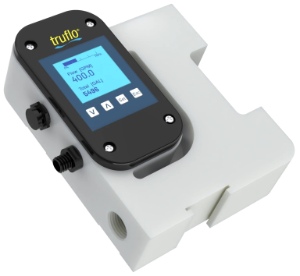
Ultrasonic flow meters use cutting-edge technology to precisely gauge the velocity of gas coursing through pipes. These meters employ transducers strategically positioned on opposite sides of the pipe. One transducer emits ultrasonic waves across the pipe, while its counterpart catches these waves. By timing the waves' journey upstream and downstream, these meters can accurately determine gas velocity. This data, when combined with the pipe's cross-sectional area, facilitates the calculation of gas flow rate. Renowned for their non-intrusive nature and versatility, ultrasonic flow meters find applications in various fields, including natural gas distribution, compressed air systems, and HVAC installations. Their appeal lies in their remarkable accuracy, wide turndown ratios, and low maintenance requirements, making them a preferred choice for gas flow measurement across industries. For further assistance and expert advice on selecting the right ultrasonic flow meter for your application, contact the product experts. They'll be glad to assist you.
Related categories: Flow Meters | Sight Flow Indicators | Water Meters | Accessories and Parts | Gas Flow Meters
A float switch is a simple, dependable way to monitor liquid level and automate pumps and alarms. As the liquid rises or falls, the float moves and opens or closes a circuit at the set point, with no complex setup or programming.
Common Uses
- Pump control – start and stop sump, lift station and transfer pumps
- High and low alarms – prevent overflows and dry running
- Tank filling – control solenoid valves and fill pumps
- Leak detection – sense water in pans and basements
Choosing a Float Switch
Select the mounting style that fits your tank (top, side or cable-suspended) and a float material compatible with the liquid, such as polypropylene, stainless or PVDF. Check the switch rating against your load and use a relay for larger pumps. Specific gravity affects how well the float works.
Centro offers float switches in many materials and styles for water, wastewater and chemical tanks.
Related categories: Liquid Level | Radar | Level Transmitters | Differential Pressure Control | Float Switches

Pressure control accessories protect instruments, simplify maintenance and make pressure measurements more accurate. Syphons, snubbers, manifolds and valves are essential to a dependable gauge or transmitter installation.
Accessories Available
- Pressure snubbers – dampen pulsation and spikes
- Syphons – protect gauges from live steam
- Manifold valves – isolate and equalize transmitters
- Gauge cock and instrument valves – isolate instruments for service
- PT plugs – quick test ports for pressure and temperature checks
Building an Installation
A typical gauge installation includes an isolation valve, a protection device (snubber or syphon) and the gauge itself. Choose materials compatible with the media and pressure ratings above system maximum.
Centro carries pressure control accessories to complete and protect your instrument installations.
Shop by type: Pressure Snubber | Manifold Valves | Gauge Cock Valve | Instrument Valve | Syphons | Instrument Valve Accessories | PT Plugs
Related categories: Pressure Control | Gauges | Pressure Transducers | Pressure Switch | Pressure Transmitters
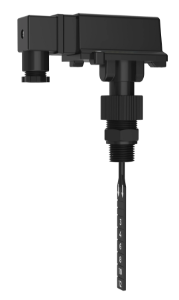
Flow switches monitor liquid or air flow and trigger alarms or shutdowns when flow is too low or too high. They protect pumps, heat exchangers, chillers and cooling systems.
Flow Switch Types
- Paddle flow switches – simple, rugged
- Thermal flow switches – no moving parts
- Piston and magnetic flow switches – precise set points
- Air flow switches – ducts and HVAC
Choosing a Switch
Select by media, flow range, pipe size, pressure and temperature. Adjustable set points add flexibility.
Centro supplies flow switches.
Related categories: Flow Control | Flow Transmitters | Flow Meters | Flow Sensors | Flow Control Accessories
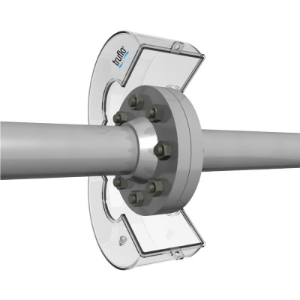
Hydraulic accessories keep hydraulic systems clean, sealed and reliable. Filters and O-rings are small parts that prevent costly failures.
Accessories Available
- Hydraulic filters – pressure, return and suction
- Hydraulic O-rings – seals for fittings and components
- Breathers – reservoir protection
- Gauges – system monitoring
Maintenance Tips
Monitor filter indicators, replace seals during service and keep oil clean to extend component life.
Centro supplies hydraulic accessories.
Shop by type: Hydraulic Filters | Hydraulic O-Rings
Related categories: Instrumentation, Measurement and Control | Swivel Joints | PVF | Temperature Measurement, Instrumentation and Control | Level Control
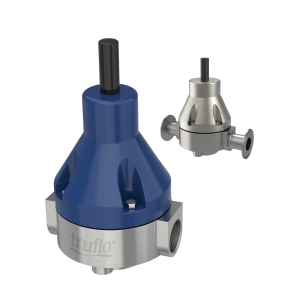
Instrumentation valves provide precise fluid control for measurement, sampling, and process control systems. Shop instrumentation solenoid valves for automated on/off switching in control loops, needle valves for fine flow adjustment in analyzer and transmitter installations, proportioning valves for electronically modulated flow control, and air-actuated valves for remote operation in process environments. Built-in materials like 316 stainless steel, brass, and PTFE, these small-bore instrumentation valves are designed for tight spaces, high pressures, and compatibility with gases, liquids, steam, and corrosive media. Browse our full selection of instrumentation valves below to find the right fit for your application, or contact us for sizing and selection assistance.
Related categories: Instrumentation, Measurement and Control | Seals and Accessories | Flow Control | Pressure Control | Controllers

Level transmitters give a continuous reading of how full a tank, vessel or silo is, usually as a 4-20 mA or digital signal sent to your PLC, display or SCADA system. That live reading supports inventory tracking, pump control, overfill prevention and batching.
Level Transmitter Technologies
- Radar – non-contact, unaffected by vapor, temperature or pressure
- Ultrasonic – economical non-contact measurement for water and wastewater
- Hydrostatic (submersible and flange-mount) – measure level from liquid head pressure
- Guided wave radar – reliable in foam, turbulence and interface applications
- Magnetostrictive and float – high-accuracy level for custody and inventory
Choosing a Transmitter
Look at the media, tank height, temperature, pressure and any foam, vapor, agitation or buildup. Non-contact radar and ultrasonic avoid wetted parts, while hydrostatic sensors are simple and cost-effective in open tanks. Check the process connection, output and hazardous area approvals.
Centro's instrumentation team can help you pick a level transmitter that handles your tank conditions reliably.
Related categories: Liquid Level | Float Switch | Float Switches | Radar | Differential Pressure Control
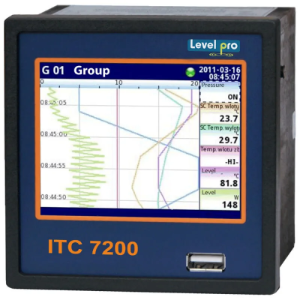
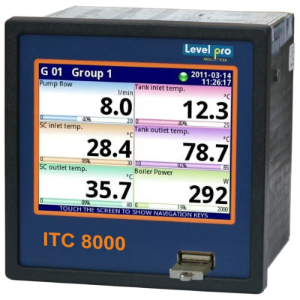
Process controllers read signals from sensors and adjust outputs to hold temperature, pressure, flow or level at set point. They range from simple panel meters to advanced PID controllers.
Controller Products
- PID controllers – precise closed-loop control
- Process meters – display and alarm process signals
- Panel meters and displays – local indication
Choosing a Controller
Match inputs (thermocouple, RTD, mA, voltage) and outputs (relay, SSR, analog) to your process. Consider alarms, ramp/soak programming and communications. Panel size (1/16, 1/8, 1/4 DIN) affects layout.
Centro offers controllers and displays for process and temperature control.
Shop by type: Panel Meters and Displays | PID
Related categories: Instrumentation, Measurement and Control | Recorders | Pressure Control | Instrument/Compression Fittings | Flow Control
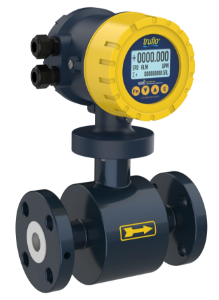
Magnetic flow meters are tools for measuring the flow of liquids in various industries. They work by using a magnetic field to determine the velocity of the fluid flowing through a pipe. One of the best things about these meters is their accuracy and reliability, especially when dealing with dirty or corrosive liquids. They're commonly used in water treatment plants, chemical processing, and even in food and beverage production because they have no moving parts and don't obstruct the flow, which means less maintenance and a longer lifespan. Have your pipe size, liquid and flow range handy, and our instrumentation team can help you size a mag meter and choose the right liner and electrode materials.
Related categories: Flow Meters | Turbine Flow Meters | Roto Meters | Anemometer Flow Meters
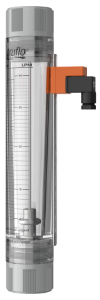
Rotameters, also called variable area flow meters, show flow with a float that rises in a tapered tube. They're simple, inexpensive and need no power, so they're widely used for purge flows, gas blending, water treatment and lab systems.
Rotameter Options
- Glass tube rotameters – clear visual indication
- Plastic and acrylic meters – water and low-pressure service
- Metal tube rotameters – high pressure, temperature and opaque fluids
- Integral needle valves – set and control flow
- Transmitters and alarms – add remote signals
Choosing a Rotameter
Rotameters are calibrated for specific fluids, pressures and temperatures, so provide your conditions for accurate scaling. Install vertically with flow upward. Metal tubes suit hazardous or high-pressure lines.
Centro supplies rotameters for liquid and gas flow indication.
Related categories: Flow Meters | Thermal Flow Meters | Turbine Flow Meters | Visual Flow Meters | Magnetic Flow Meters
$599.87
Subject to factory lead times
Subject to factory lead times
Subject to factory lead times
$499.87
Subject to factory lead times
$4,615.18$4,999.65
Subject to factory lead times
$4,615.18$4,999.65
Subject to factory lead times
$2,999.76$3,249.65
Subject to factory lead times
$3,230.53$3,499.65
Subject to factory lead times
$3,692.08$3,999.65
Subject to factory lead times
$369.20$399.95
Subject to factory lead times
$119.96$129.95
Subject to factory lead times

$119.96$129.95
Subject to factory lead times

$119.96$129.95
Subject to factory lead times

$171.06
Subject to factory lead times
$230.73$249.95
Subject to factory lead times

$553.82$599.95
Subject to factory lead times
Subject to factory lead times
$83.04$89.95
Subject to factory lead times

$64.58$69.95
Subject to factory lead times

$2,629.81
Subject to factory lead times
$2,839.81
Subject to factory lead times

$119.96$129.95
Subject to factory lead times

$1,949.79
Subject to factory lead times
$2,309.80
Subject to factory lead times
$599.87
Subject to factory lead times
Subject to factory lead times
Subject to factory lead times
$499.87
Subject to factory lead times
$4,615.18$4,999.65
Subject to factory lead times
$4,615.18$4,999.65
Subject to factory lead times
$2,999.76$3,249.65
Subject to factory lead times
$3,230.53$3,499.65
Subject to factory lead times
$3,692.08$3,999.65
Subject to factory lead times
$369.20$399.95
Subject to factory lead times
$119.96$129.95
Subject to factory lead times
$119.96$129.95
Subject to factory lead times
$119.96$129.95
Subject to factory lead times
$171.06
Subject to factory lead times
$230.73$249.95
Subject to factory lead times
$553.82$599.95
Subject to factory lead times
Subject to factory lead times
$83.04$89.95
Subject to factory lead times
$64.58$69.95
Subject to factory lead times
$2,629.81
Subject to factory lead times
$2,839.81
Subject to factory lead times
$119.96$129.95
Subject to factory lead times
$1,949.79
Subject to factory lead times
$2,309.80
Subject to factory lead times
- Selecting the right process instrument starts with defining four things: what variable you need to measure (temperature, pressure, flow, or level), the process conditions the instrument will face (media type, temperature range, pressure range, corrosiveness, and whether the environment is hazardous), the accuracy and response time your application requires, and how the measurement data needs to be communicated (local display only, 4–20 mA signal to a PLC/DCS, or digital protocol like HART or Modbus). For temperature, the choice between thermocouples, RTDs, and infrared sensors depends on the temperature range and accuracy needed. For pressure, gauge type, range, wetted materials, and whether you need local indication or a remote transmitter signal are the key decisions. For flow, the fluid properties (conductive liquid, gas, steam, slurry) determine whether a magnetic, ultrasonic, Coriolis, vortex, or variable-area meter is the best fit. For level, vessel conditions (open vs. pressurized, clean liquid vs. foam/solids) guide the choice between float switches, ultrasonic, radar, or differential pressure technologies. Centro's instrumentation specialists can help you match the right technology to your specific process conditions and budget.
- Accurate process instrumentation is the foundation of safe, efficient, and compliant operations. Every control loop — whether it manages boiler pressure, reactor temperature, tank level, or pipeline flow — depends on instruments that provide reliable, real-time measurements. If a temperature sensor reads inaccurately, a heater may overshoot and damage the product or create a safety hazard. If a level transmitter drifts, a tank may overflow or run dry. If a flow meter is undersized, the control system cannot maintain the correct feed rate. Beyond safety and quality, accurate instrumentation directly impacts energy consumption, raw material usage, and regulatory compliance. Calibrated, properly specified instruments reduce waste, prevent unplanned shutdowns, and provide the data required for regulatory reporting and quality documentation.
- A process control loop is a system that continuously measures a process variable, compares it to a desired setpoint, and adjusts an output to keep the variable at the setpoint. The loop consists of three elements: the sensor/transmitter (measures the variable — e.g., a thermocouple measuring temperature), the controller (compares the measurement to the setpoint and calculates a corrective output — typically a PID controller), and the final control element (adjusts the process — e.g., a control valve that opens or closes to change steam flow). Instruments are the eyes and ears of the loop — without accurate, responsive sensors and transmitters, the controller cannot make correct decisions, and the process drifts out of specification. The entire loop must be properly engineered as a system — sensor accuracy, transmitter range, controller tuning, and valve sizing must all be matched to the process requirements.
- Industrial instruments communicate with controllers and PLCs using standardized electrical signals. The 4–20 mA analog current loop is the most widely used signal in process instrumentation — it transmits a variable measurement as a proportional current (4 mA = zero/low range, 20 mA = full scale), and the current-based signal is resistant to voltage drop and electrical noise over long cable runs. The 0–10 V DC voltage signal is used in some HVAC and building automation applications but is more susceptible to noise and cable length limitations. Discrete (on/off) signals — from switches, relays, and transmitter alarm contacts — indicate threshold conditions like high level, low pressure, or flow/no-flow. Digital communication protocols — HART (layered on top of 4–20 mA for configuration and diagnostics), Foundation Fieldbus, PROFIBUS PA, and IO-Link — enable bidirectional communication between the instrument and the control system for advanced diagnostics, remote configuration, and multi-variable data.
- When instruments are installed in locations classified as hazardous (areas where flammable gases, vapors, or combustible dusts may be present), they must be approved for that classification to prevent ignition. Key considerations include the area classification (Class I for gases/vapors, Class II for dusts, with Division 1 for normally present hazards and Division 2 for abnormal conditions — or Zone 0/1/2 under ATEX/IECEx), the protection method (intrinsic safety, explosion-proof, non-incendive, or purged/pressurized), and the specific gas group and temperature class. Intrinsically safe (IS) instruments — used with IS barriers in the safe area — limit energy to levels too low to cause ignition and are the most common and practical approach for low-power sensors and transmitters. Explosion-proof enclosures contain any internal explosion and are used for higher-power devices. Always verify the instrument's certification (FM, CSA, ATEX, IECEx) matches the area classification before installation.